When Comparables Fail: The New Science of Valuing Australia's Irreplaceable Estates
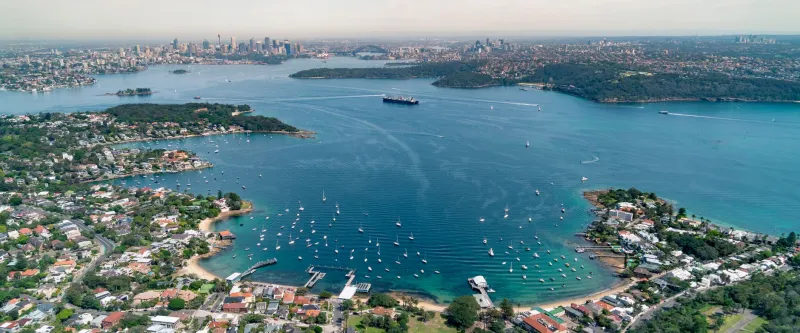
There is a particular moment that every experienced prestige property advisor recognises — the pause that follows when a client asks, with complete reasonableness, what a property is actually worth. For a terrace in Paddington or a bayside apartment in South Yarra, the answer arrives with relative confidence, anchored by a trail of comparable transactions. For a clifftop estate on the Mornington Peninsula, a private archipelago holding off Queensland's Whitsunday coast, or a sandstone compound with documented colonial provenance on Sydney Harbour's northern shore, the silence that follows that question is not ignorance. It is intellectual honesty.
Australia's ultra-luxury property market is experiencing what might be called the prestige paradox: the more exceptional a property becomes, the less reliable conventional valuation methods prove in capturing its worth.
The Limits of the Comparable Sales Method
The comparable sales approach — the bedrock of residential valuation practice across Australia — operates on a straightforward premise. Recent transactions involving similar properties in similar locations provide a market-tested reference point. Adjustments are made for differences in land size, condition, and configuration, and a defensible figure emerges.
This methodology functions admirably across the broad spectrum of the residential market. It begins to strain, however, when properties possess characteristics so singular that the pool of genuine comparables shrinks to near nothing. A homestead with 400 metres of direct Sydney Harbour frontage, a heritage-listed pastoral estate in the Hunter Valley with 150 years of documented provenance, or a purpose-engineered clifftop residence designed by a globally recognised architect — these are not properties for which the market has recently provided a tidy trail of equivalent sales.
The Australian Property Institute acknowledges this tension, noting that valuers exercising professional judgement on prestige properties must increasingly rely on broader market evidence and qualitative assessment rather than purely quantitative comparison. In practice, this means the most significant property transactions in Australia are being assessed through frameworks that extend well beyond the standard valuation report.
What the Spreadsheet Cannot Capture
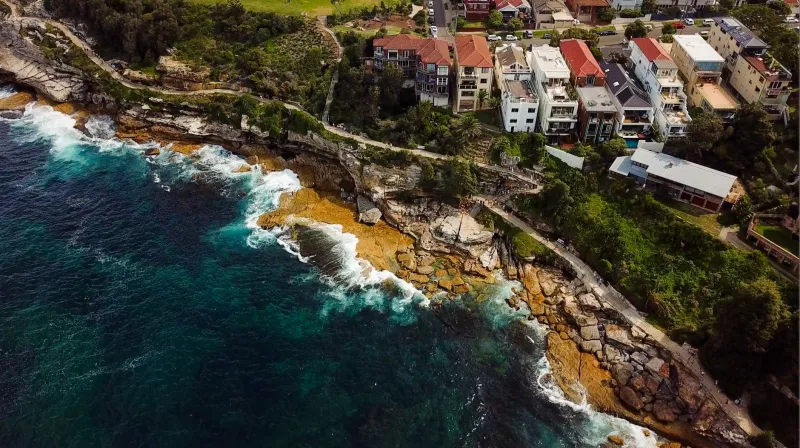
Among the factors that resist conventional quantification, geological longevity has emerged as one of the more intellectually rigorous additions to prestige due diligence. Astute buyers — and their increasingly specialised advisory teams — are commissioning detailed geotechnical assessments that examine not merely present structural conditions but the projected stability of land over decadal timeframes. For clifftop and coastal holdings in particular, understanding erosion rates, bedrock composition, and groundwater behaviour has become as fundamental as reviewing the title.
Heritage documentation presents a similarly complex valuation challenge. A property with a thoroughly archived history — architectural drawings, original correspondence, photographic records spanning generations — carries an intangible premium that no standard valuation formula accommodates. Yet among Australia's most sophisticated buyers, this documentation is understood to confer genuine, if difficult to quantify, value. It speaks to permanence, to cultural significance, and to the kind of narrative that cannot be manufactured after the fact.
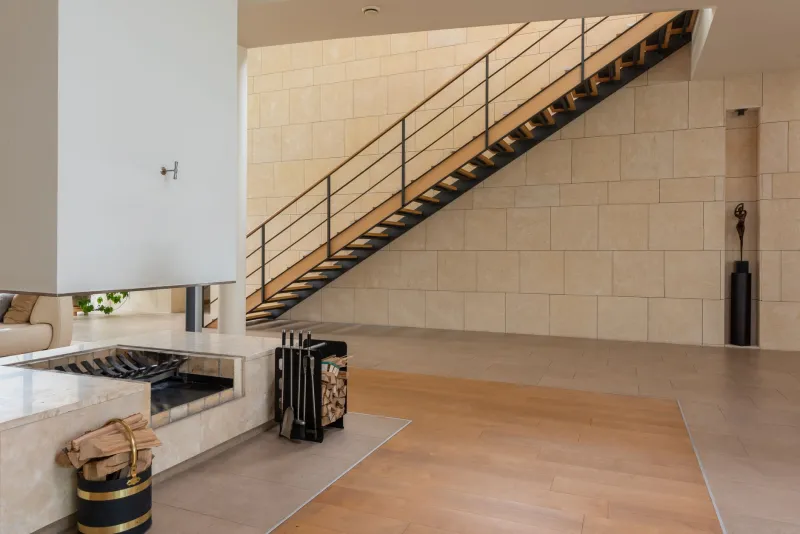
Bespoke construction quality presents a third frontier. When a property's fit-out includes hand-laid limestone sourced from a quarry no longer in operation, or structural timberwork milled from old-growth species now protected, the cost of replication — if replication were even possible — bears little relationship to conventional depreciated replacement value. The replacement cost method, another pillar of standard valuation practice, encounters its own ceiling when confronted with the genuinely irreproducible.
The Rise of the Advisory Consortium
In response to these limitations, the most significant prestige transactions in Australia are increasingly being guided not by a single valuer but by a coordinated advisory consortium. This typically brings together a senior prestige specialist from one of the established agency groups, an independent valuer with demonstrable experience in the ultra-luxury tier, a heritage consultant where provenance is a material consideration, and — in coastal or elevated settings — a geotechnical or environmental engineer.
The output of this consortium is less a single figure than a structured narrative of value. What does the property offer that cannot be replicated? What risks does it carry that conventional inspection would not reveal? What is the realistic pool of buyers globally — not merely domestically — who would both qualify and desire this specific holding? In some instances, the most meaningful comparable is not a recent Australian sale at all, but a transaction in comparable prestige markets: the Côte d'Azur, New Zealand's Queenstown basin, or the Pacific Palisades.
This internationalisation of the reference frame reflects a broader truth about Australia's ultra-luxury market: at its apex, it competes not with the suburb next door but with the world's most coveted addresses.
Reframing Value for the Long Term
Perhaps the most significant shift in how exceptional Australian properties are assessed is temporal. Conventional valuation is, by design, a snapshot — an estimate of market value at a specific point in time. But the buyers and custodians of Australia's most extraordinary estates are increasingly thinking in generational terms. The relevant question is not merely what the market would pay today, but what the property will represent in thirty years: as a financial asset, as a family legacy, and as a physical structure subject to the pressures of climate variability and evolving community expectations.
This long-horizon thinking is reshaping what buyers are willing to pay a premium for. Properties with demonstrable resilience — structural, environmental, and cultural — are commanding a growing premium over those that merely appear impressive at first inspection. The estate that has been thoughtfully maintained and documented across multiple decades of ownership communicates something that no recently completed renovation can replicate: a track record of enduring value.
A Market That Demands a Different Discipline
The prestige paradox ultimately reflects a healthy maturation of Australia's luxury property market. As the cohort of ultra-high-net-worth buyers grows more sophisticated, and as the properties they seek become more genuinely exceptional, the discipline of assessment must evolve to meet them.
This is not a failure of the valuation profession. It is an acknowledgement that the most remarkable properties in this country exist in a category of their own — one that rewards intellectual rigour, specialist knowledge, and the willingness to look beyond the most recent comparable sale. For those who navigate this space with appropriate care, the reward is not merely a transaction. It is a genuine understanding of what makes a property irreplaceable.