The Vanishing Listing: Why True Exclusivity Has Retreated From Public View
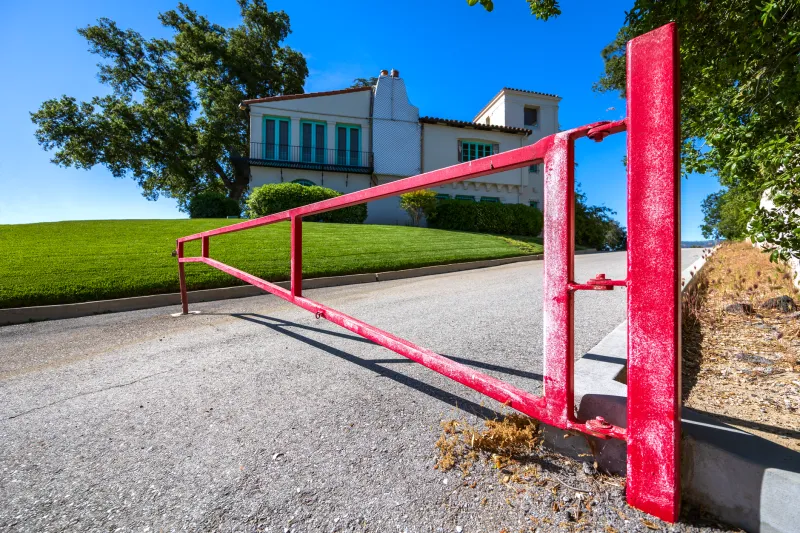
There is a quiet irony at the heart of Australia's prestige property market. At a moment when digital platforms promise unprecedented access to listings, floor plans, price histories, and comparable sales data, the properties that matter most — the ones that genuinely command attention at the upper reaches of the market — have largely ceased to appear on any platform at all.
This is not coincidence. It is strategy.
The Democratisation Paradox
The proliferation of property portals over the past decade has fundamentally altered how Australians engage with real estate. From Surry Hills to South Yarra, from Toorak to Tamarama, buyers at virtually every price point can now access a depth of market intelligence that was once the exclusive province of seasoned agents and well-connected families.
For most of the market, this democratisation has been an unambiguous good. Buyers are better informed. Pricing is more transparent. The information asymmetry that once allowed vendors to extract premiums from the uninformed has been substantially compressed.
But at the very top of the market, something different has occurred. The same transparency that empowers the average buyer has become, for the ultra-wealthy, a signal of ordinariness. A property that appears on a public portal — photographed, described, priced, and available to anyone with a mobile device — is, by definition, not exclusive. And exclusivity, for this cohort, is not a marketing device. It is the point.
Off-Market as the New Standard
Among Australia's most discerning buyers, the off-market transaction has shifted from occasional exception to standard expectation. Agents operating at the prestige end of markets such as Point Piper, Portsea, and Cottesloe increasingly report that their most significant mandates are never publicly advertised. Vendors in this segment do not want exposure — they want precision. A single qualified buyer, introduced through a trusted intermediary, is worth infinitely more than ten thousand digital impressions from an unvetted audience.
This shift has meaningful implications for how prestige property is bought and sold. It places a premium on relationships over research, on access over algorithms. The buyer who secures an exceptional property in today's market rarely does so by refreshing a portal. They do so because they are known — by the right agents, in the right circles, at the right time.
For those outside these networks, the consequence is a market that appears, on the surface, to be functioning normally, while its most compelling inventory has effectively vanished from sight.
The Signal Value of Absence
There is another dimension to this phenomenon that deserves consideration. In a market saturated with listings, the act of not listing has itself become a statement. Vendors who choose to transact privately signal something important: that their property does not require the validation of public demand, that its worth is self-evident to those with the knowledge to recognise it, and that the transaction will proceed on terms dictated by the vendor rather than the market.
This is not merely a negotiating posture. It reflects a genuine philosophical alignment between the nature of the property and the nature of the transaction. Exceptional homes, built or acquired over generations, are not commodities. Treating them as such — subjecting them to open inspections, online bidding, and the blunt instrument of public auction — is, in the view of many vendors in this space, a form of category error.
The off-market approach preserves something that public listing cannot: the dignity of a private exchange between parties who understand what is actually being transferred.
What This Means for Buyers
For those seeking to participate in this stratum of the market, the implications are clear, if not always comfortable. Preparation must precede opportunity. A buyer who has not established relationships with the relevant agents, demonstrated their capacity and intent, and articulated their requirements with precision will not be called when the right property becomes quietly available.
This is a market that rewards patience, credibility, and a willingness to operate on a timeline defined by the vendor rather than the buyer's own urgency. It is, in many respects, the inverse of the competitive open-market dynamic that characterises most property transactions.
It also demands a different kind of due diligence. Without the comparative data that public listings provide, buyers must rely on their advisers — legal, financial, and architectural — to establish value in the absence of market benchmarks. This is not a disadvantage for those who are properly supported. It is, rather, an opportunity to acquire something that has been deliberately withheld from the competition.
The Future of Prestige Scarcity
As digital platforms continue to expand their reach and refine their capabilities, the divergence between the visible market and the truly exclusive one is likely to widen further. The very sophistication of online property intelligence will continue to push the most exceptional assets further from public view, as vendors seek to preserve the conditions under which genuine prestige can exist.
In this sense, the information age has not diminished exclusivity in Australian property. It has, paradoxically, reinforced it — by making the absence of information the most reliable indicator that something truly worth having is being quietly offered to those equipped to receive it.
The most coveted properties in Australia are not hidden because they are flawed. They are hidden because they are extraordinary. And in a world where everything is visible, invisibility has become the rarest luxury of all.