Substance Over Spectacle: How Australia's Most Refined Buyers Are Quietly Redefining What Prestige Means
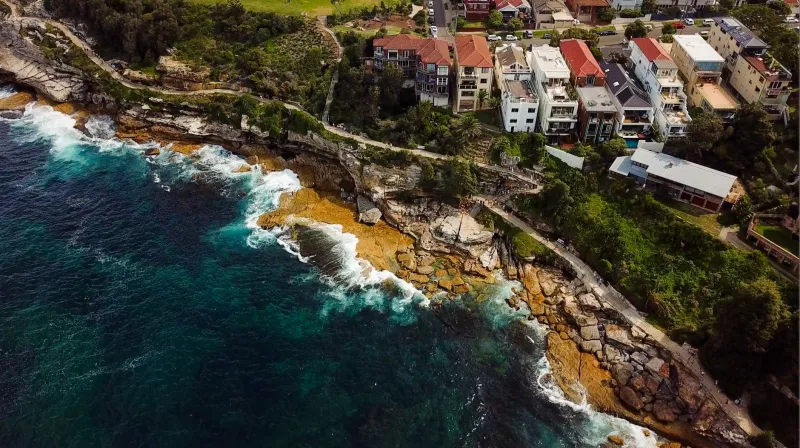
For much of the past two decades, Australia's prestige property market operated on a relatively simple equation: the more commanding the view, the more theatrical the architectural gesture, the higher the price commanded. Clifftop residences with floor-to-ceiling glass facing the Pacific. Harbour-front penthouses engineered for maximum visual drama. Sprawling estates whose first impression was always, deliberately, overwhelming.
That equation is being quietly, but decisively, revised.
Among Australia's most discerning buyers—those for whom the purchase price is rarely the limiting factor—a different set of questions is now driving acquisition decisions. Not what does this property show me? but rather what does this property tell me, upon closer inspection? The shift is subtle in its expression but profound in its implications, and it is reshaping the prestige market in ways that reward patience, knowledge, and a willingness to look beyond the surface.
The Limits of the View
There is nothing inherently wrong with a spectacular vista. Sydney Harbour, the Whitsunday coastline, the Mornington Peninsula's rolling green contours—these remain among the world's genuinely extraordinary backdrops. But experienced buyers have come to understand something that first-time entrants into the prestige market often do not: a view is a feature that belongs, in some meaningful sense, to the landscape rather than the property itself.
It can be obstructed by a neighbour's redevelopment. It can be diminished by coastal erosion, changed planning regulations, or the slow encroachment of canopy growth. And crucially, it is a feature that every prospective buyer can evaluate immediately and instinctively—which means it is almost always already priced in, often generously so.
What cannot be priced so easily—what requires expertise, diligence, and a certain quality of attention to assess—is the structural and material character of the property itself. The integrity of its bones. The calibre of its construction. The quality of its silence.
Quiet Excellence as a Market Signal
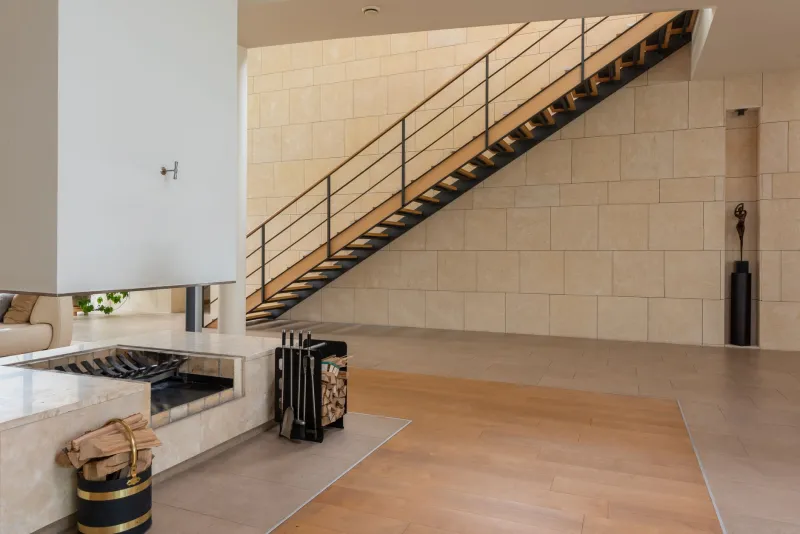
The concept of 'quiet excellence' has entered the vocabulary of Australia's most sophisticated property professionals, and it describes something genuinely distinct from mere restraint or minimalism. A property characterised by quiet excellence does not announce itself. It does not perform. It reveals itself gradually, through the weight of a door, the acoustic properties of a room, the precise way natural light moves through a considered fenestration, the unmistakable solidity of materials chosen for longevity rather than immediate effect.
This is the property that improves upon acquaintance—that rewards the buyer who lingers, who asks questions, who returns for a second or third inspection with a structural engineer or a materials specialist in tow. It is, in a meaningful sense, the opposite of the trophy property designed to dazzle at first encounter and sustain the impression through sheer visual force.
For buyers who have already owned the dramatic property—who have lived with the panoramic view and the architectural showpiece—the appeal of quiet excellence is often visceral and immediate. They have learned, through experience, what endures and what merely impresses.
The Durability Premium
Underpinning this philosophical shift is a hardening focus on long-term resilience—not simply as a financial consideration, but as an expression of values. The ultra-wealthy buyer who is acquiring property for generational purposes is asking a fundamentally different set of questions than the buyer seeking a five-year capital growth play.
They want to know whether the construction methodology will hold its integrity across decades of coastal humidity, or the thermal cycling of an inland climate. They want to understand the provenance of materials: whether the stone is locally quarried and architecturally appropriate, whether the timber has been seasoned and treated to standards that will outlast a single generation's occupancy. They are interested, increasingly, in what a property will look and feel like in thirty years—not merely in how it photographs today.
This durability premium is beginning to manifest in transaction data, though it remains difficult to isolate precisely because it operates across so many variables simultaneously. Properties with documented construction quality, verifiable material specifications, and a demonstrable record of minimal structural intervention are attracting a quality of buyer that the market has not previously associated with understated addresses.
What the Market Is Learning
The implications for sellers, agents, and developers operating in Australia's prestige space are significant. Properties that might previously have been considered difficult to market—those without the obvious drawcard of a harbour view or a celebrated architect's signature—are finding audiences among buyers whose sophistication has outpaced the conventional prestige narrative.
Conversely, properties that have historically commanded premiums on the strength of their visual drama alone are facing more searching scrutiny. Buyers are arriving with technical advisers. They are requesting detailed construction documentation. They are asking questions that, five years ago, would have been considered unusual at the prestige end of the market.
This is not, it should be emphasised, a rejection of beauty or of considered design. The most desirable properties in this emerging paradigm are frequently those that achieve both—that demonstrate material integrity and structural excellence while also expressing a refined aesthetic sensibility. The distinction is between beauty that is intrinsic to the property's fabric and beauty that is borrowed from its surroundings or manufactured through theatrical intervention.
The Maturation of a Market
Every luxury market, in every category, moves through a recognisable arc. Early entrants are drawn by novelty and spectacle. As the market deepens and the buyer cohort matures—as more participants bring genuine expertise and long experience to their purchasing decisions—the criteria for excellence become more nuanced, more demanding, and more difficult to satisfy with surface impressions alone.
Australia's prestige property market is moving through precisely this transition. The buyers who are now setting the tone at the highest price points are not easily dazzled. They have seen the views. They have owned the architectural landmarks. What they are seeking now is something rarer and, ultimately, more valuable: a property that does not need to explain itself, because its quality is evident to anyone with the knowledge to look for it.
This is the prestige paradox in its most honest expression. The properties that whisper, it turns out, have the most to say.