What the Ground Tells You: Why Soil Science Has Become Non-Negotiable Due Diligence for Australia's Most Astute Buyers
There is a particular kind of confidence that comes with purchasing a prestige property in Australia. The address is impeccable. The architecture is considered. The views, the finishes, the orientation — all of it speaks to a level of curation that justifies the investment. And yet, beneath that polished surface, beneath the engineered stone benchtops and the thermally broken glazing, lies something no architect can fully control: the earth itself.
A quiet but meaningful shift is underway among Australia's most discerning buyers. Where once a comprehensive building and pest inspection represented the outer limit of pre-purchase scrutiny, a new class of due diligence has emerged — one that reaches far deeper, both literally and figuratively. Detailed geotechnical and soil composition reports are now being commissioned as standard practice by buyers operating at the upper end of the market. The question is no longer simply what has been built, but what it has been built upon.
The Hidden Variable Beneath Every Prestige Address
Australia's geological diversity is extraordinary, and not always in ways that favour the property owner. From the reactive clays of Melbourne's outer suburbs to the acid sulfate soils that fringe coastal Queensland, and the collapsing fill profiles that lurk beneath some of Sydney's most coveted hillside addresses, the subsurface environment presents risks that a visual inspection will never reveal.
Reactive clay soils — classified on a spectrum from slightly reactive to extremely reactive — expand and contract with changes in moisture content. In periods of prolonged drought followed by heavy rainfall, the movement can be substantial. Footings designed without adequate geotechnical input, or those constructed on land that has since been altered by neighbouring development or changed drainage patterns, are particularly vulnerable. The consequences range from cosmetic cracking that erodes presentation to structural compromise that renders a property functionally uninhabitable without significant remediation.
For buyers investing eight, nine, or ten figures into a single asset, these are not theoretical concerns. They are financial exposures of the highest order.
Why Standard Inspections Fall Short
The building inspection, for all its utility, operates within defined parameters. A qualified inspector assesses what is visible and accessible — the condition of the structure as it currently presents. What it cannot assess is trajectory. Is the slight cracking observed at a window reveal the result of a one-time settlement event long since stabilised, or is it the early expression of ongoing movement driven by a soil profile that will continue to shift across decades?
Without a geotechnical report, that question cannot be answered with any confidence. And in prestige property, confidence is the currency that underpins every transaction.
Engineers and geotechnical consultants are increasingly being engaged at the pre-purchase stage rather than post-acquisition. Bore logs, soil classification testing, and subsurface profiling can now be completed within timeframes that accommodate standard contract conditions. The cost — typically ranging from several thousand dollars for a residential assessment to considerably more for larger landholdings — is, by any measure, a modest premium against the potential exposure it mitigates.
Coastal Complexity: When Location Meets Geology
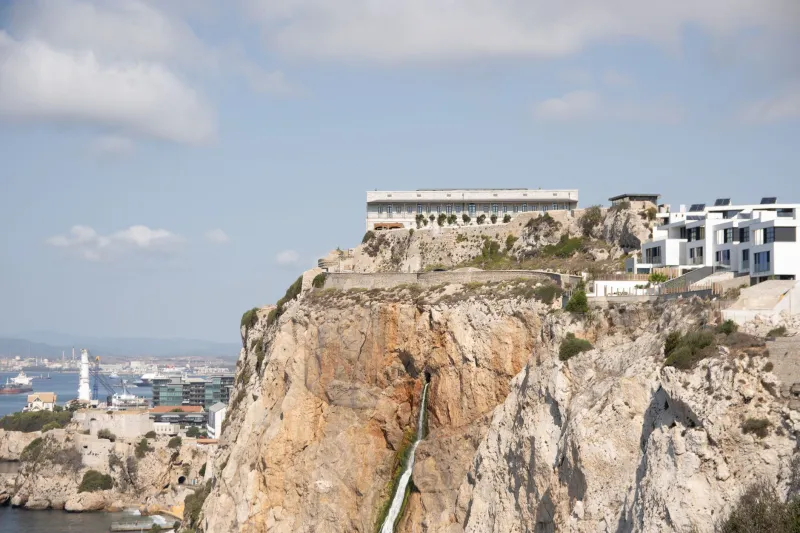
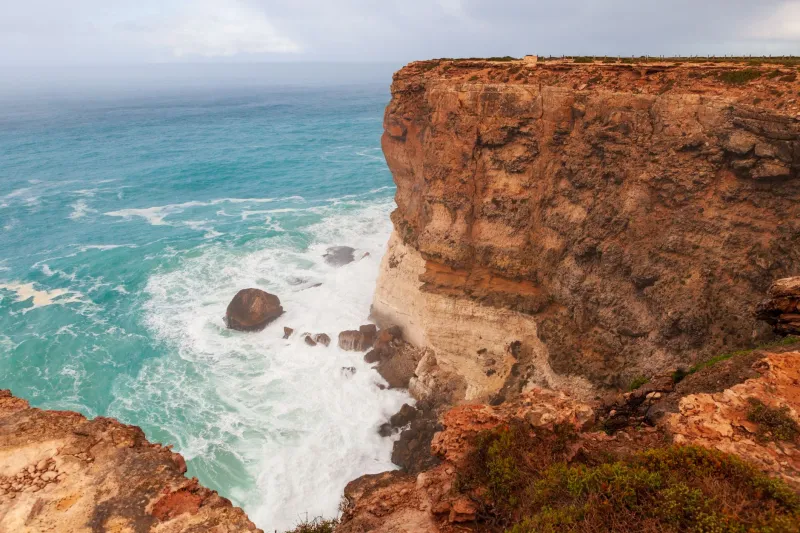
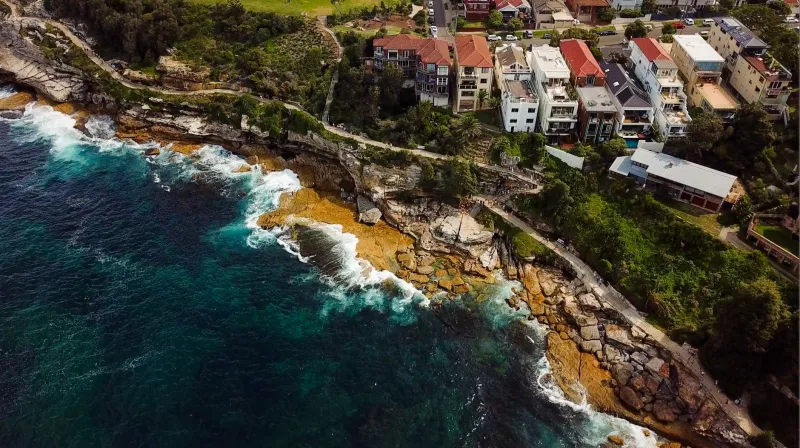
Australia's most coveted coastal addresses carry their own distinct geological challenges. The clifftop and headland properties that command the nation's highest per-square-metre valuations are, by their very nature, situated at the interface of land and sea — an environment of perpetual geological negotiation.
Erosion, groundwater intrusion, and the long-term stability of sandstone and shale formations are considerations that extend well beyond what any building inspector is qualified to assess. Rock anchoring, retaining wall integrity, and the movement of groundwater through fractured bedrock are disciplines unto themselves. For buyers acquiring landmark coastal properties, engaging a geotechnical engineer with specific coastal experience is no longer an indulgence — it is elementary prudence.
The same principle applies to properties situated on reclaimed land or in areas with known fill histories. Much of Australia's inner-urban development occurred on land that was progressively filled, drained, or otherwise modified throughout the nineteenth and twentieth centuries. In some of Sydney's most prestigious harbourside precincts, for instance, the fill profile beneath a property can tell a story that the heritage facade above it entirely conceals.
Generational Wealth and the Long View
The buyers who are driving this shift in due diligence practice are not, as a rule, short-term speculators. They are individuals and families acquiring properties with a generational horizon — estates and residences intended to anchor family wealth across multiple decades and, in some cases, multiple generations. For these buyers, the soil beneath a property is not an abstraction. It is a component of the asset itself.
This perspective reframes the geotechnical report not as a cost but as an instrument of value preservation. A property with a documented, stable soil profile and a foundation system that has been independently validated carries a verifiable quality that its competitors may lack. In a market where differentiation at the highest price points is increasingly difficult to achieve through aesthetics alone, geological credibility is emerging as a meaningful point of distinction.
Conversely, a property acquired without adequate subsurface due diligence carries an embedded uncertainty that no amount of subsequent renovation can fully resolve. Foundation remediation, underpinning, and drainage rectification are among the most expensive and disruptive interventions a property owner can face — and they are, almost invariably, more economical to anticipate than to address.
What Sophisticated Buyers Are Now Asking
The practical implications for buyers operating in this space are straightforward. Before exchanging contracts on any prestige acquisition — and particularly on properties that are clifftop, coastal, hillside, or situated on land with any history of modification — the engagement of a qualified geotechnical consultant should be treated as a standard line item in the due diligence budget.
The questions worth asking are neither esoteric nor particularly technical. What soil classification applies to this site? Has the land been filled or modified? Is there evidence of groundwater at depth, and how does it interact with the existing foundation system? Has the site been assessed in the context of changing climate conditions, including extended dry periods and intensified rainfall events?
These are questions that the earth, properly interrogated, is entirely capable of answering. The sophistication lies simply in deciding to ask them.
The New Standard of Prestige Due Diligence
Australia's prestige property market has always rewarded those who look beyond the obvious. The buyers who have consistently preserved and grown their property wealth are those who understood, early, that the value of a prestige asset is not contained within its walls. It is shaped by its location, its land, its provenance — and, increasingly, by the geological integrity of the ground on which it stands.
Soil science is not glamorous. It does not photograph well, and it will never feature in an architectural awards submission. But for the buyer who intends to hold a prestige property across decades, it may prove to be the most consequential piece of intelligence they commission. In a market where the margin between an exceptional investment and an expensive liability can be measured in metres of subsoil, knowing what lies beneath is no longer optional. It is the new standard of excellence.