The Ground Beneath the Price: Why Australia's Elite Buyers Are Looking to Geology Before Architecture

There is a particular kind of confidence that comes not from a property's facade, nor from the reputation of its architect, but from something far older and far less visible. It comes from the ground itself. Across Australia's most coveted coastal and metropolitan precincts, a discerning cohort of ultra-wealthy buyers has begun to reframe the fundamental question of prestige property acquisition — shifting focus from what sits atop the land to what lies immovably beneath it.
This is not a casual trend. It is a considered philosophical repositioning, one driven by deepening awareness of climate volatility, economic unpredictability, and the finite nature of genuinely stable land. In the language of Australia's most sophisticated buyers, geological permanence has become the new architectural pedigree.
When the Land Becomes the Asset
For much of Australia's prestige property history, the structure has dominated the conversation. The calibre of the builder, the provenance of the materials, the lineage of the designer — these have long served as the primary signals of value. Land was understood as context, a backdrop against which the dwelling performed.
That understanding is being quietly but fundamentally revised.
The buyers reshaping this conversation are those for whom a single acquisition may represent tens of millions of dollars — individuals who engage geotechnical engineers before engaging interior designers, who commission independent geological assessments before submitting expressions of interest. For them, the land is not backdrop. It is the primary instrument of value, and everything built upon it is secondary.
This reorientation is partly pragmatic. As coastal erosion accelerates along stretches of the New South Wales and Queensland coastlines, and as extreme weather events test the structural assumptions of even recently constructed prestige homes, the question of what the land itself can endure has become urgent. But it is also philosophical. Geology, by definition, operates on timescales that render market cycles irrelevant. Bedrock that has remained stable for tens of millions of years does not concern itself with interest rate movements.
The Language of Geological Due Diligence
For the uninitiated, geological due diligence in property acquisition may seem esoteric — the domain of mining engineers rather than property buyers. In practice, it is becoming a structured and increasingly standardised discipline within Australia's prestige market.
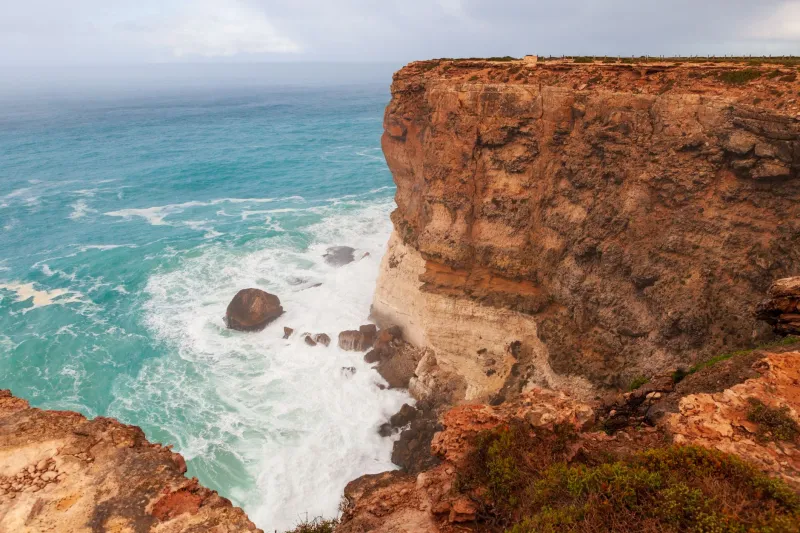
The process typically begins with a geotechnical report, which assesses soil composition, bearing capacity, and susceptibility to movement or subsidence. Beyond this, more comprehensive assessments examine bedrock depth and integrity, proximity to fault lines, historical groundwater behaviour, and the mineral composition of the underlying strata. In coastal settings, additional analysis considers wave erosion rates, cliff face stability, and the long-term trajectory of land-sea interaction.
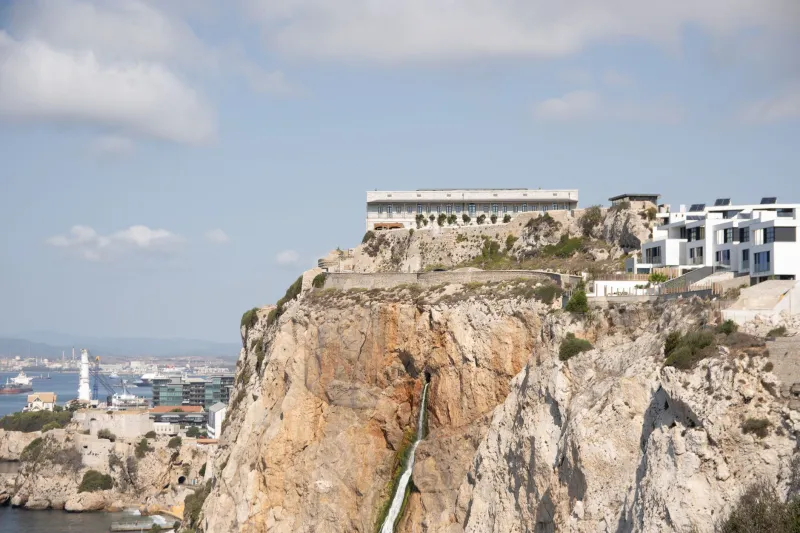
In Sydney's northern beaches and eastern suburbs — where clifftop positions command extraordinary premiums — geological assessments have become a near-standard component of pre-purchase due diligence at the upper end of the market. Similar patterns are emerging in Melbourne's Mornington Peninsula and along select stretches of the Gold Coast hinterland, where elevated positions on geologically ancient formations are attracting buyers specifically for their permanence.
What buyers are paying for, in essence, is irreproducibility. A home can be rebuilt. The geological formation upon which it stands cannot.
Mineral Composition and the Premium of Permanence
Beyond structural stability, the mineral composition of land is emerging as a subtle but meaningful differentiator in the prestige market. Properties situated on granite formations, for instance, are regarded by geotechnical specialists as among the most stable residential land types in Australia — dense, non-porous, and largely impervious to the kind of reactive soil movement that has compromised the structural integrity of countless homes built on clay-heavy substrates.
In parts of Sydney's upper north shore and in select areas around Perth's hills district, granite-based land commands a quiet premium that rarely appears explicitly in marketing materials but is understood implicitly by buyers who have done their research. The same logic applies to properties situated on ancient sandstone shelves — the very formations that define much of Sydney's coastal character and that have, in geological terms, been tested by conditions far more extreme than any contemporary climate scenario.
This mineralogical awareness extends to drainage behaviour, thermal mass, and even the long-term impact on structural foundations. A buyer who understands that their property sits on a formation that has remained geologically inert for sixty million years is purchasing a form of certainty that no market analysis can replicate.
Geological Surveys and the New Due Diligence Standard
The integration of geological assessment into prestige property transactions is being driven, in part, by a generation of buyers who approach real estate with the same analytical rigour they apply to institutional investment decisions. These are individuals accustomed to stress-testing assumptions, modelling long-term scenarios, and identifying risks that are not immediately visible in conventional financial analysis.
For these buyers, a property's architectural distinction remains important — but it is now understood as one component of a more complex value equation. Geological permanence, climate resilience, and the irreplaceable nature of the land itself have joined heritage provenance and design pedigree as the defining criteria of genuinely exceptional property.
Engaging specialist geotechnical consultants as part of the acquisition process is no longer unusual at the top of the Australian market. Several of the country's leading prestige agencies have begun facilitating these assessments as a standard service offering, recognising that buyers at the highest price points expect a level of due diligence that extends well beyond conventional building and pest inspections.
A Hedge Against Everything That Changes
There is something deeply compelling about the idea of land as a hedge — not merely against inflation or currency fluctuation, but against the broader uncertainty of an era defined by rapid and unpredictable change. Climate volatility, geopolitical instability, and the accelerating pace of technological and social transformation have created a class of buyers for whom permanence itself has become the ultimate luxury.
Geologically ancient land, by this reasoning, is not simply a stable foundation for a prestige home. It is a statement about time — a deliberate alignment with something that has endured, and will continue to endure, regardless of what occurs above it. In an age of impermanence, the appeal of that proposition is considerable.
Australia, with its ancient continental geology and extraordinary diversity of landforms, is uniquely positioned to offer this kind of asset. The continent's geological stability — among the oldest and most tectonically settled on earth — means that the premium of permanence is, in many cases, already embedded in the landscape. The most sophisticated buyers are simply learning to read it.
For those who understand that the most enduring investments are measured not in decades but in geological epochs, the ground beneath the price is not a metaphor. It is the asset itself.