Beyond the Safe: How Australia's Ultra-Wealthy Are Engineering Properties as Indestructible Financial Fortresses
For decades, the prestige property market operated on a relatively straightforward premise: acquire something beautiful, in the right postcode, and allow time to do the rest. The trophy home was precisely that—a trophy. A statement. A reward made tangible in sandstone, glass, and ocean views.
That calculus has shifted considerably.
Across Australia's most exclusive coastal enclaves and metropolitan precincts, a new and notably more deliberate philosophy has taken hold among the country's wealthiest buyers. Property, for this cohort, is no longer evaluated primarily through the lens of aesthetics or social currency. It is being assessed as a financial instrument—one capable of absorbing volatility, deflecting legal risk, and preserving capital across time horizons that extend well beyond a single generation.
The result is a quietly transforming market, where the most important conversations are no longer happening at inspection days. They are happening in the offices of private wealth advisers, family lawyers, and structural engineers.
The Structural Foundation of Financial Confidence
At its most literal level, the shift begins with the building itself. Buyers operating at the upper end of the Australian market have become increasingly exacting in their demands for structural integrity—not merely as a matter of comfort or longevity, but as a direct expression of financial prudence.
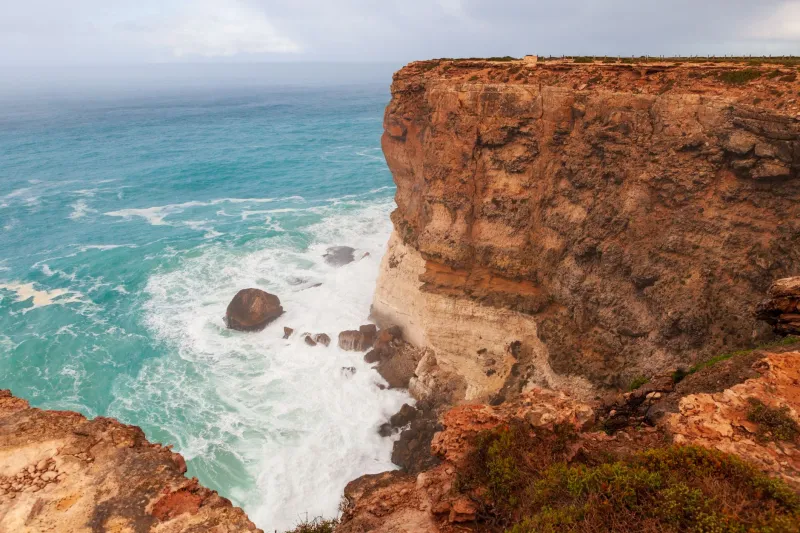
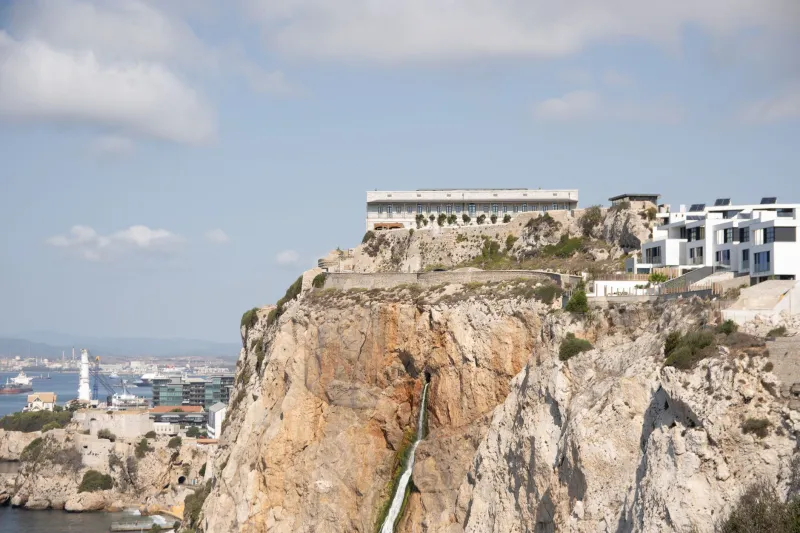
Geological assessments, independent engineering reports, and detailed material provenance have moved from optional due diligence to non-negotiable prerequisites. Properties constructed on solid bedrock, with documented foundations and demonstrable resistance to environmental stress, command a measurable premium in the current climate. This is particularly pronounced in coastal markets such as Sydney's northern beaches, the Mornington Peninsula, and Queensland's Noosa hinterland, where proximity to natural beauty has historically been balanced against the vulnerability that proximity can invite.
The reasoning is straightforward, if rarely spoken aloud: a property that cannot be compromised physically is a property that retains its value regardless of what the broader market is doing. Structural resilience, in this context, is not a feature. It is a financial argument.
Legal Architecture as Asset Protection
Beyond the physical, Australia's ultra-wealthy are investing considerable effort in the legal scaffolding that surrounds their property holdings. Ownership structures have grown increasingly sophisticated, with family trusts, corporate entities, and layered beneficiary arrangements becoming standard instruments in the prestige segment.
The motivations are multiple. Asset protection from litigation remains a primary driver, particularly among buyers whose professional exposure creates ongoing personal liability risk. Succession planning represents another significant consideration—structuring property ownership in ways that allow for seamless generational transfer, without triggering unnecessary tax events or exposing assets to contested estate proceedings.
Australian family law has also sharpened the focus of many high-net-worth buyers on pre-acquisition structuring. The manner in which a property is held can have profound implications in the event of relationship dissolution, and sophisticated buyers are increasingly unwilling to leave those implications to chance. Legal architecture, in this sense, functions as a form of invisible fortification—one that protects the asset not from the elements, but from human contingency.
Design as Defensive Strategy
The intersection of architecture and asset protection extends into design itself, and in ways that are reshaping what prestige buyers are willing to pay for.
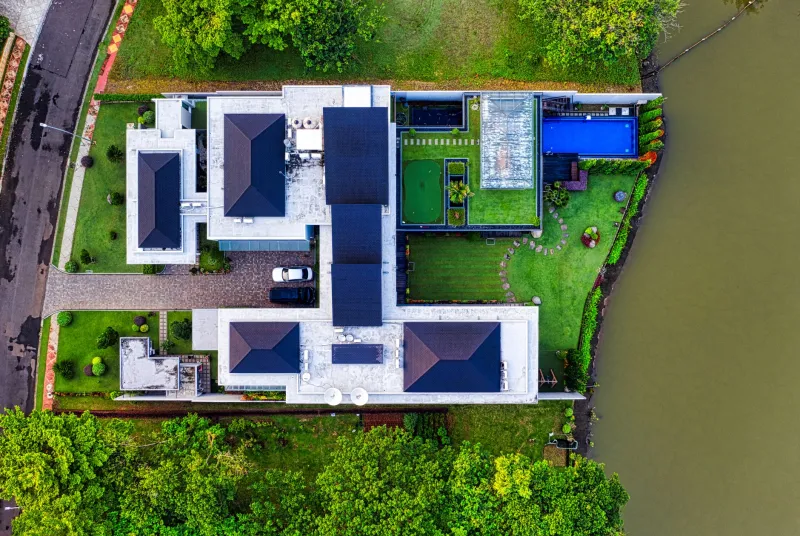
Passive resilience has become a genuine design priority. Properties engineered to operate independently of external infrastructure—through integrated energy generation, water capture and filtration, and climate-controlled environments—are attracting significant premiums from buyers who view self-sufficiency as a form of financial insulation. In an era of supply chain uncertainty and escalating utility costs, the ability to function entirely off-grid is no longer the preserve of environmental idealism. It is pragmatic wealth preservation.
Similarly, materials selection has taken on a new significance. Buyers are scrutinising not only the aesthetic qualities of the finishes in a prestige property, but their durability, their maintenance profile, and their contribution to the property's long-term cost of ownership. Imported stone that requires specialist maintenance, bespoke joinery that cannot be replicated without significant expense, and mechanical systems tied to discontinued product lines are being viewed with increasing scepticism. The question being asked, quietly but consistently, is whether the property will be as valuable in thirty years as it is today—and whether its upkeep will compound or erode that value.
The Illiquidity Premium, Reconsidered
One of the more counterintuitive developments in Australia's prestige market is the way in which illiquidity has been reframed. Traditionally, the relative difficulty of converting real estate into cash was viewed as a limitation—a concession made in exchange for the stability and appreciation that property historically delivered.
Among today's most sophisticated buyers, that framing has inverted. Illiquidity, carefully managed, is understood as a protective feature. Property that cannot be rapidly liquidated is property that cannot be subject to the panic-driven decisions that periodically destroy value in more liquid asset classes. The inability to sell at a moment's notice is, for a buyer with sufficient liquidity elsewhere, a structural advantage—one that insulates the asset from the emotional volatility that accompanies market downturns.
This perspective is reshaping acquisition strategy. Buyers are increasingly comfortable holding prestige property for extended periods, treating it less as a position to be traded and more as a foundational anchor within a broader portfolio. The parallels to the way institutional investors treat infrastructure assets are not incidental.
Where the Market Is Heading
The implications for Australia's prestige property landscape are significant and, in several respects, already visible.
Properties that can demonstrate a confluence of structural integrity, sophisticated ownership architecture, design resilience, and low ongoing liability are commanding premiums that cannot be fully explained by location or aesthetics alone. Buyers are paying for certainty—for the confidence that what they are acquiring will protect and compound their capital across conditions they cannot yet anticipate.
Agents and vendors who understand this shift are positioning their offerings accordingly. The language of the prestige market is changing: less focused on lifestyle aspiration, more attentive to the qualities that make a property genuinely defensible as a financial instrument.
For buyers who have spent careers building wealth through disciplined risk management, this approach to property feels entirely natural. The luxury home was always, at some level, a store of value. What has changed is the rigour with which that function is now being pursued—and the sophistication of the tools being deployed to ensure it is fulfilled.
In Australia's most exclusive markets, the vault has always been a metaphor. Increasingly, it is also a blueprint.