Held in Trust: The Philosophy of Stewardship Quietly Transforming Australia's Greatest Private Estates
Ownership, in the conventional sense, implies dominion. The owner decides, controls, modifies, and ultimately disposes. It is a relationship defined by authority — the authority of the present over the object possessed.
But among a growing cohort of Australia's most thoughtful and financially secure property holders, this conception of ownership is being quietly, deliberately set aside. In its place, something older and, arguably, more demanding has emerged: the idea of the custodian — the person who holds something of significance not as a permanent possession, but as a temporary trust, accountable not only to themselves but to those who will come after.
This is not sentiment. It is a philosophy with direct and measurable consequences for how prestige properties are acquired, maintained, and ultimately transferred across generations.
The Weight of What Endures
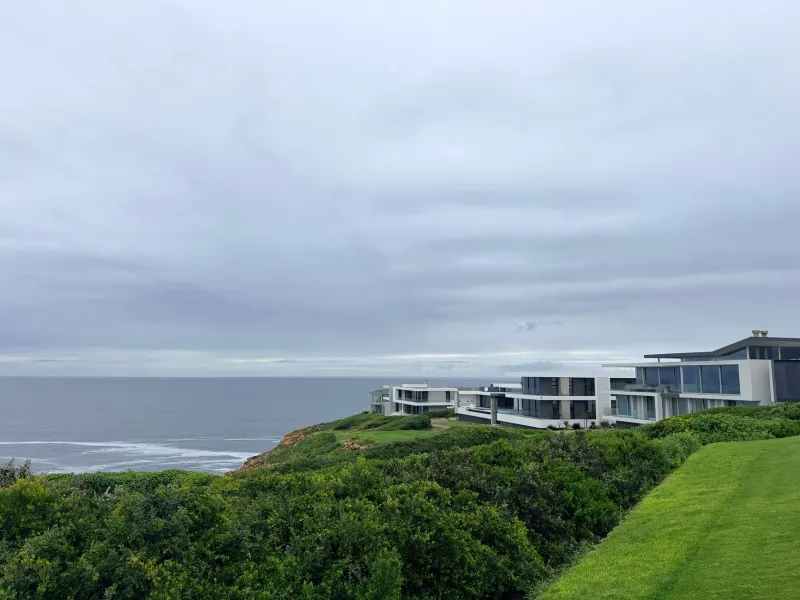
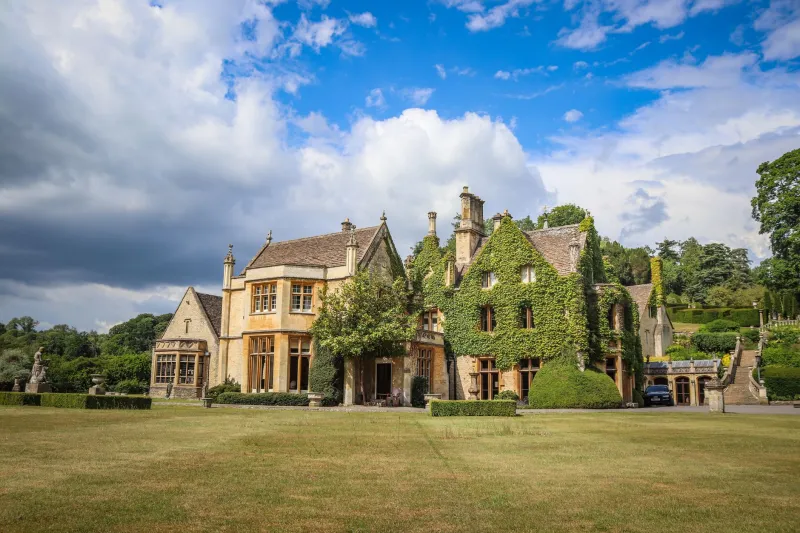
Australia's prestige property landscape includes homes of remarkable architectural, historical, and cultural significance. Federation mansions in Melbourne's inner east, sandstone estates overlooking Sydney Harbour, mid-century masterworks perched above the Pacific — these are not simply dwellings. They are physical records of particular moments in Australian life, embodying the craftsmanship, the materials, and the aesthetic intelligence of their era.
For an owner who regards themselves as a custodian rather than a proprietor, the question of what to do with such a property is fundamentally different from the question facing a conventional owner. The custodian does not ask: what do I want this property to be? They ask: what does this property require of me? What has it been, what is it now, and what must be preserved so that it can continue to speak for itself in twenty or fifty years?
This is a more demanding posture. It requires the subordination of personal taste to a higher obligation — the obligation of stewardship.
Restoration Over Renovation
The practical expression of this philosophy is most visible in how custodian-minded owners approach the physical fabric of their properties. Where a conventional owner might be tempted to modernise, to refresh, to impose the aesthetics of the present moment on a structure with its own established character, the custodian instinctively resists.
This does not mean that custodian-owned properties are frozen in time, or that contemporary comfort is sacrificed on the altar of historical purity. The finest examples of this approach achieve something more nuanced: a careful, informed conversation between the original vision and the requirements of contemporary living, conducted with sufficient respect for the former that the latter never overwhelms it.
Restoration specialists — conservators, heritage architects, and tradespeople trained in the materials and methods of earlier periods — have found a growing and appreciative client base among this cohort. The premium commanded by documented, expert restoration work is not, in the custodian's calculus, an extravagance. It is an investment in the property's continued integrity, and therefore in its continued capacity to carry meaning across time.
Architecture as Inheritance
For custodian-minded owners who commission new construction — whether primary residences, guest pavilions, or additions to existing estates — the architectural brief is shaped by the same long-term perspective. The question is not what is fashionable, or what will photograph well for a design publication, but what will age with grace and serve the next generation as faithfully as it serves the present one.
This orientation tends to favour materials and forms with established track records: stone, hardwood, hand-made brick, and structural approaches that have demonstrated their durability across decades. It tends to produce architecture that is restrained rather than expressive, coherent rather than spectacular — buildings designed to become more themselves over time rather than to make an immediate impression.
The irony, of course, is that this approach often produces the most genuinely impressive results. A home built with fifty years in mind, using materials selected for their longevity and crafted with care for their detailing, tends to outlast and outshine its more fashionable contemporaries by a considerable margin.
Legacy and the Long View
The custodian mindset has implications that extend well beyond the physical fabric of a property. It shapes the legal and financial structures through which prestige property is held, the terms on which it is eventually transferred, and the conditions — sometimes formally documented — under which future owners may use or modify it.
Family trusts, heritage covenants, and carefully structured succession arrangements are all instruments through which custodian-minded owners seek to extend the obligations of stewardship beyond their own tenure. The goal is not to control from beyond the grave, but to ensure that the values that animated their own custodianship have a reasonable chance of persisting in those who follow.
This is, in a meaningful sense, a form of generational communication — an attempt to convey not just a property but a set of values about what matters, what endures, and what is worth the effort of preservation.
A Different Measure of Success
In a market culture that tends to measure success in capital gains and price-per-square-metre comparisons, the custodian mindset offers a genuinely different account of what it means to do well by a prestige property.
Success, in this framework, is not achieved at the point of sale. It is achieved when a property reaches the next generation — or the generation after that — in better condition than it was received, with its essential character intact and its capacity to endure undiminished. It is achieved when the decisions made during one's tenure prove, with the perspective of time, to have been worthy of the trust that stewardship implies.
This is a demanding standard. But for those who have internalised it, it is also a deeply satisfying one — and, perhaps unexpectedly, a commercially astute one. Properties held and maintained with this level of care tend to appreciate not merely in monetary terms but in the harder-to-quantify currency of significance: the quality that separates a truly exceptional property from one that is merely expensive.
In the end, the custodian mindset is not a retreat from the market. It is a more sophisticated engagement with it — one that measures value across a timeline longer than most, and finds, in that longer view, a form of success that ownership alone can never quite provide.