Reading the Fine Print: Eight Signals That a Million-Dollar Asking Price Deserves a Second Look
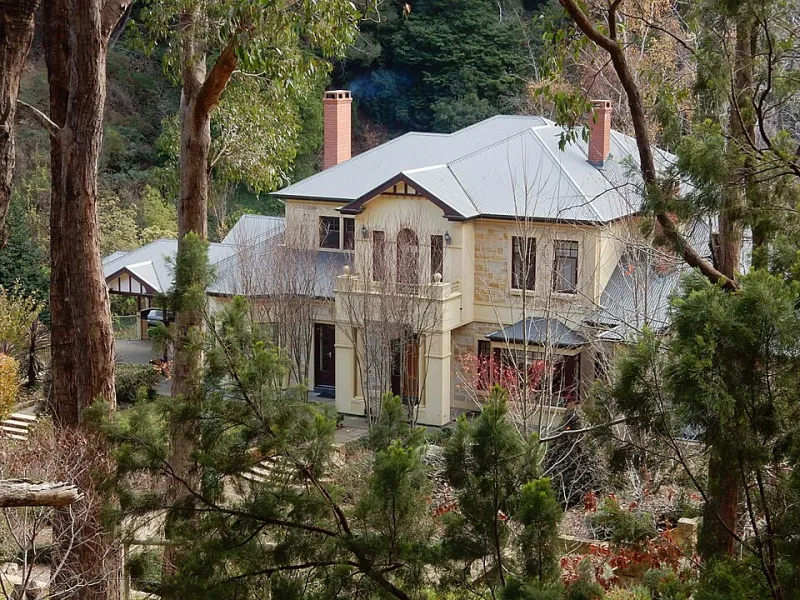
Photo: Michael Coghlan from Adelaide, Australia, CC BY-SA 2.0, via Wikimedia Commons
At $10 million and above, the margin for error widens dramatically — in dollars, and in the sophistication required to avoid them. Unlike the mainstream market, where auction clearance rates provide a rough public temperature check, the prestige tier trades on private information, imperfect comparables and, occasionally, on the assumption that a wealthy buyer won't ask too many questions. The best ones ask plenty. Here is what they look for.
1. A Pricing History With Gaps
Every credible agent can account for a property's campaign history. When the narrative becomes vague — a listing withdrawn mid-campaign, a sale that quietly fell over, an ownership structure that seems to shift — treat it as a prompt for deeper due diligence. Offshore-influenced pricing, in particular, can leave a residue: a benchmark set by a buyer motivated by factors other than Australian market fundamentals.
2. Styling That Outshines the Structure
Professional staging is standard practice; nothing wrong with it. But when the furniture, lighting and florals are doing extraordinary work while the roofline sags and the joinery is veneer-thin, ask what the styling is compensating for. Experienced buyers' agents routinely attend inspections with a builder or engineer in tow — and recommend their clients do the same above $5 million.
3. Comparables That Don't Compare
A common technique in prestige marketing is to anchor a property against the suburb's record sale, regardless of differences in land, aspect or provenance. If the agent's comparable is a one-off trophy from three years ago, the asking price is built on an outlier, not a market.
4. Motivation That Won't Disclose
Why is the vendor selling? In ordinary markets it hardly matters. At the top end, it matters enormously. A distressed timeline, a partnership dissolution or an estate in transition can justify a discount — and a vendor unwilling to give any indication of motivation is often a vendor holding out for a price the market won't validate.
5. Approvals and Restrictions in the Shadows
Heritage overlays, covenant restrictions, tree preservation orders, unresolved DA conditions — these can materially constrain what a buyer can actually do with a property. If a listing's value proposition rests on future development or renovation potential, verify the approvals independently. Never take the brochure's word.
6. The Land Value Doesn't Add Up
In prestige property, the land is the asset; the house is the depreciation. A disciplined buyer will strip out improvements and assess the raw land against comparable vacant or near-vacant sales. When the land component alone doesn't justify the asking price, the buildings need to be exceptional — and genuinely new — to close the gap.
7. A Campaign Built on Whisper, Not Evidence
Some vendors substitute marketing theatre for market evidence: exclusive previews, artificial deadlines, talk of a competing buyer that never quite materialises. Genuine competition leaves a paper trail. Pressure without evidence is a negotiation tactic, not a valuation.
8. The Market's Silence
Perhaps the most reliable indicator is the simplest: how long has it been listed, and what has happened since? A prestige property that has quietly re-listed twice, with incremental price reductions that never appear in the advertising, is telling you something the campaign never will.
The One Sign the Price Is Earned
And the exception? Provenance. A property with documented history — architect, provenance, craftsmanship, an unbroken record of careful ownership — will always look expensive against comparable floor areas and land sizes. It is meant to. Where irreplaceability can be independently verified, a premium isn't a red flag. It's the entire point.