The Horizon Line: How Australia's New Money Geography Is Leaving the Water Behind
Photo: ESO, CC BY 4.0, via Wikimedia Commons
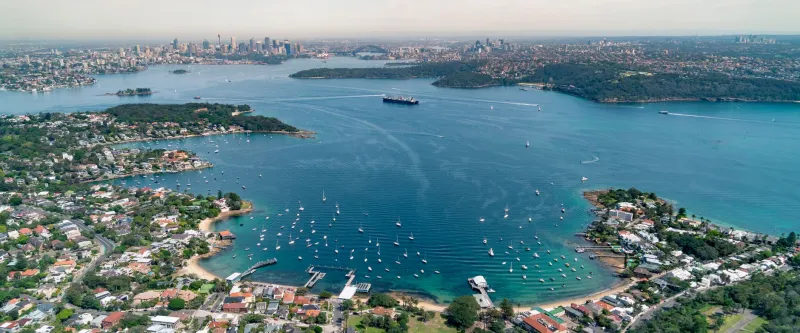
For the better part of four decades, the Australian prestige market operated on a simple premise: proximity to water equalled proximity to wealth. Point Piper, Toorak's garden-fringed boulevards, the beachfronts of Perth's western suburbs — these were the fixed coordinates of national affluence. That premise is now under review.
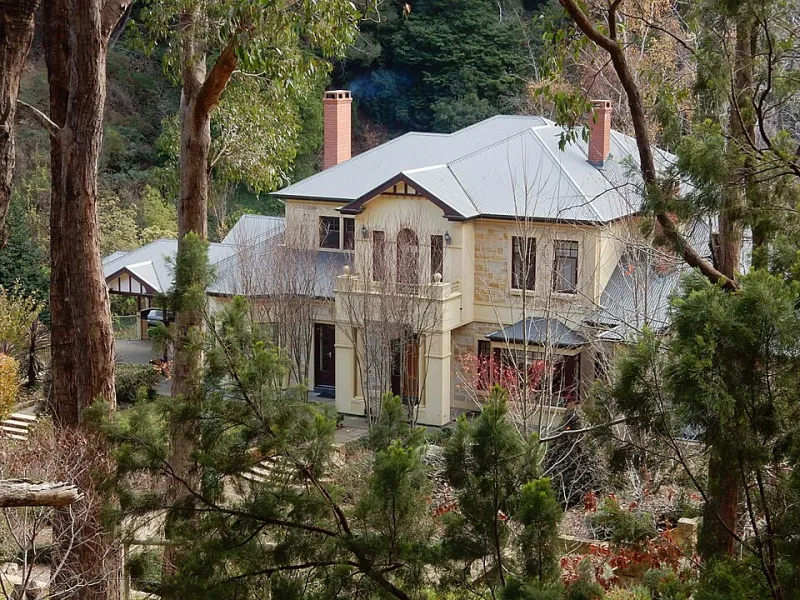
Across the past several selling seasons, a pattern has emerged that seasoned agents describe as the most significant geographic recalibration in a generation. Vast rural holdings — properties measured in the thousands of acres rather than hundreds of square metres — are commanding prices that would have been unthinkable outside a capital-city blue-chip suburb.
The Numbers Behind the Migration
Consider the trajectory. Lifestyle acreage within ninety minutes of Sydney, Melbourne or Brisbane has, in select transactions, cleared the $20 million threshold — figures once the sole province of Point Piper and Mosman. In the Southern Highlands, consolidated grazing estates with restored homesteads have become some of the most contested assets in the state. In the Byron hinterland, ridge-line holdings with ocean glimpses have traded at sums that rival beachfront itself. The Yarra Valley has seen vineyard estates attract interstate and offshore interest that local vignerons describe as unprecedented.
The common thread is not simply space. It is scale — and the privacy, permanence and self-sufficiency that scale makes possible.
Why the Water Lost Its Monopoly
Three forces are converging. The first is structural: the post-pandemic normalisation of distributed work decoupled the wealthy from the daily commute, allowing the weekend retreat to become the primary residence. The second is psychological. A harbour view, however magnificent, is shared — visible from ferries, neighbouring balconies and the occasional drone. Ten thousand acres offers a horizon line that belongs to no one else.
The third force is generational. Australia's newest cohort of significant wealth — much of it built in technology, funds management and private enterprise — displays a marked preference for land over lifestyle apartments. Land is finite, productive and, increasingly, a hedge against everything from market volatility to the subtle indignities of being overlooked by the neighbours.
What This Means for the Coast
It would be premature to declare the waterfront finished. Scarcity remains absolute at the very top of the harbour and beach markets, and trophy assets there continue to clear records. But the middle tier — the $8 million to $15 million water-adjacent property — is feeling the shift. Vendors who once assumed an automatic premium for proximity to water are discovering that buyers now benchmark against the hinterland alternative: more land, more privacy, more house for the same capital.
The implications for valuation are non-trivial. Traditional comparable sales analysis struggles when a category of asset — the very-large rural lifestyle holding — has so few transactions and such wide dispersion in quality. Buyers and their advisers are increasingly pricing these estates on replacement cost, land bank value and, in productive regions, agricultural yields.
A New Map of Australian Prestige
The prestige map of Australia is being redrawn, quietly and without ceremony. The new coordinates are not a postcode but a radius: close enough to a capital city for a board meeting, far enough for a horizon that ends where the eye does. For the country's wealthiest buyers, the view has stopped being the point. The land itself has become the point — and everything the water never promised: room, silence and the rarest luxury of all, distance on one's own terms.