The Quiet Country: How Australia's Inland Estates Are Becoming the New Benchmark for Generational Wealth

Photo: Erich Wagner (www.eventografie.de), CC BY-SA 4.0, via Wikimedia Commons
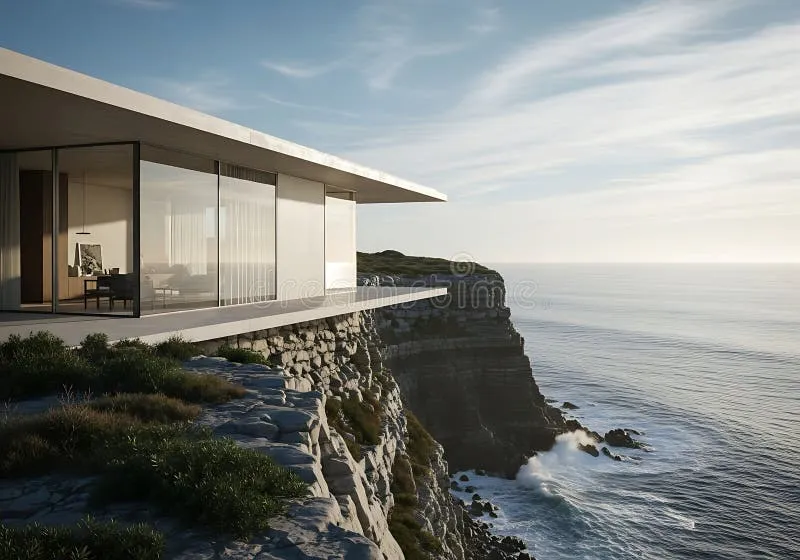
For decades, the hierarchy of Australian prestige real estate was largely settled. Coastal was supreme. A waterfront address—whether Sydney Harbour, the Mornington Peninsula shoreline, or a clifftop parcel above the Pacific—conferred a status that no inland property could credibly challenge. The ocean was the ultimate amenity, and proximity to it was the ultimate measure of value.
That consensus is shifting. Among a growing cohort of ultra-high-net-worth buyers, the calculus of prestige is being quietly but decisively renegotiated—and the beneficiaries are Australia's most compelling inland regions.
A Pivot Rooted in More Than Preference
To characterise this trend as mere fashion would be to misread it. The movement toward inland estates reflects a convergence of practical, philosophical, and financial motivations that are reshaping how generational wealth approaches the question of property.
Climate considerations feature prominently in the conversation. Coastal properties, for all their enduring appeal, are increasingly subject to scrutiny from a risk-assessment perspective. Rising insurance premiums in flood- and storm-exposed coastal corridors, combined with longer-term questions about sea-level exposure, are prompting sophisticated buyers to look at their property portfolios with a more measured eye. Inland locations, particularly those at elevation or within protected valley systems, offer a different risk profile—one that is attracting the attention of family offices and wealth managers who think in generational rather than transactional terms.
But the shift is not merely defensive. It is also aspirational, driven by a recalibration of what escape actually means.
The Psychology of True Retreat
The coastal prestige property, for all its beauty, exists in a particular kind of social visibility. Waterfront homes in Sydney's Eastern Suburbs or on the Whitsundays coastline are, almost by definition, observed. They are photographed from boats and seaplanes, discussed in the property press, and embedded in a social geography that makes genuine anonymity difficult.
For buyers who have spent careers navigating public life, the appeal of a different kind of retreat is intuitive. Inland estates—particularly those situated in private valleys, surrounded by working farmland, or positioned within the rolling topography of regions like the Southern Highlands or the Yarra Valley ranges—offer something the coast increasingly cannot: the experience of genuine disappearance.
"Our clients are not running away from the coast," observes one Melbourne-based buyers' advocate who specialises in off-market prestige acquisitions. "They are running toward something that the coast can no longer offer. Real privacy. Real quiet. The sense that the outside world genuinely cannot find you."
The Regions Commanding Attention
Several inland regions are emerging as focal points for this new category of prestige investment, each with a distinct character and appeal.
The Southern Highlands, New South Wales, has long occupied a particular position in the imagination of Sydney's established wealth. Its proximity to the capital—roughly ninety minutes by road—combined with its cool-climate character, heritage township fabric, and tradition of serious equestrian and agricultural estates makes it a natural landing point for buyers seeking substance over spectacle. The region's prestige property market has tightened considerably in recent years, with significant parcels rarely reaching open market.
The Macedon Ranges, Victoria, occupies an analogous position relative to Melbourne. Historically associated with the pastoral holdings of Victoria's oldest families, the Ranges have seen renewed interest from buyers seeking larger landholdings and the particular quality of seclusion that comes with forested, elevated terrain. Properties here are often measured in hundreds of acres rather than square metres, and the architecture tends toward the considered and enduring rather than the immediately impressive.
The Clare and Eden Valleys, South Australia, and the broader wine country stretching through the Barossa, represent a different proposition—one that blends productive landholding with the aesthetic pleasures of vine-covered landscapes and the cultural infrastructure of a serious food and wine region. For buyers whose conception of luxury encompasses provenance, craft, and the pleasures of the table, these regions offer a coherence that purely residential estates cannot match.
Private valley estates in Southeast Queensland's hinterland are attracting a newer category of buyer—often entrepreneurs and technology wealth seeking properties that combine self-sufficiency, natural seclusion, and a certain remove from the social obligations of the coast.
The Architecture of the Inland Compound
The properties being commissioned in these regions are not simply rural houses writ large. They are purposefully designed compounds, often conceived over years in collaboration with architects who understand both the demands of serious agricultural or environmental stewardship and the requirements of a family that expects the same standard of amenity it would find in a Toorak mansion or a Point Piper terrace.
The best examples integrate guest accommodation, working farm infrastructure, wellness facilities, and the kind of domestic technology that allows for seamless management from a distance. Sustainability is not an afterthought but a structural commitment: solar and battery systems, water harvesting and storage, and regenerative land management practices are increasingly standard specifications rather than optional additions.
This reflects a broader understanding among buyers in this category that the inland estate, unlike the coastal showpiece, must function as a complete and largely self-contained world.
A Market in Formation
From a purely analytical standpoint, the inland prestige market in Australia remains, in several key regions, significantly undervalued relative to its coastal equivalent. The scarcity of truly exceptional holdings—large, private, architecturally distinguished, and positioned in regions with genuine long-term appeal—is a structural feature of the market rather than a temporary condition.
For buyers with the patience and the access to identify and secure these properties, the opportunity is considerable. The coastal market has decades of price discovery behind it. The inland prestige market, in its current form, does not.
What is becoming clear, across the conversations that matter in this market, is that the question is no longer whether inland estates belong in the same conversation as coastal trophy properties. They do. The more interesting question is how quickly the broader market will arrive at that conclusion—and what the implications will be for those who recognised the shift early.