Beyond the Balance Sheet: Why Australia's Wealthiest Are Betting on Bespoke Architecture as the Ultimate Store of Value

Photo: Rachellpearl, CC BY-SA 4.0, via Wikimedia Commons
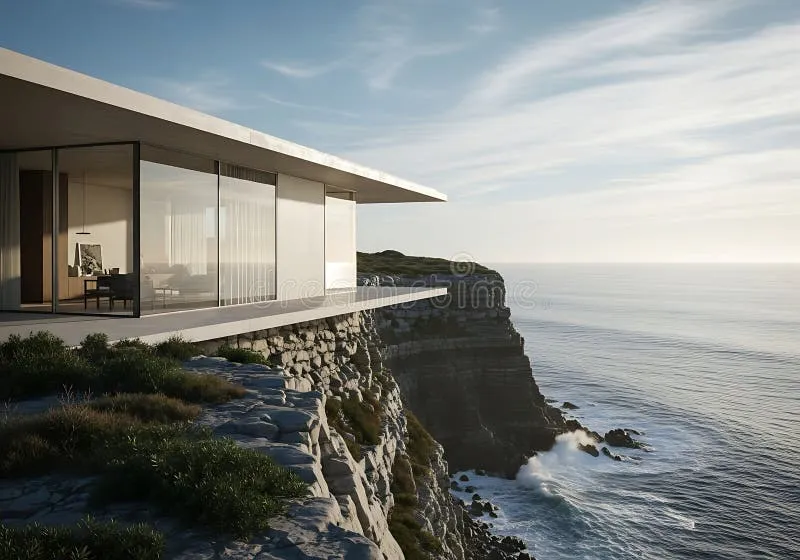
In the lexicon of alternative investments, the conversation has long revolved around fine art, rare wine, and private equity. Yet a more architecturally ambitious category is quietly asserting itself among Australia's ultra-high-net-worth community: the bespoke residential property — not as a place to simply live, but as a considered, long-horizon asset that combines aesthetic significance with enduring capital value.
The shift is measurable. Advisors to family offices and private wealth managers across Sydney, Melbourne, and Brisbane report a meaningful reallocation of discretionary capital toward one-of-a-kind homes designed by architects of international standing. The motivations are layered, the due diligence rigorous, and the outcomes — for those who have navigated the market with precision — increasingly compelling.
A Different Kind of Asset Class
To understand why architecturally significant homes are attracting serious investment attention, it helps to consider what distinguishes them from the broader luxury property market. The distinction is not merely one of price point. It is one of irreplaceability.
A conventional prestige property, however beautifully appointed, exists within a category. There are comparable sales, comparable properties, comparable trajectories. A home designed by a Pritzker Prize laureate or a nationally recognised Australian master — built to a specific brief, on a specific site, expressing a singular architectural vision — occupies no category. It is, in the truest sense, a one-of-a-kind object.
This scarcity is foundational to the investment thesis. In markets governed by supply and demand, genuine uniqueness creates a floor beneath value that conventional residential property cannot replicate. When the architect's career achieves full retrospective recognition, or when the cultural conversation around a particular design philosophy matures, the asset's significance — and its price — can appreciate in ways that bear little relationship to broader property market movements.
The Architects Commanding Attention
Within Australia, a handful of architectural practices have achieved the kind of standing that elevates their completed residential work to the status of collected objects. Firms whose principals have received recognition from the Australian Institute of Architects or have built international reputations through museum commissions and cultural projects are increasingly being engaged for private residential commissions — not despite the cost premium their involvement commands, but because of it.
The logic mirrors that of the art market. A painting by an artist represented in major public collections carries a provenance that transcends its physical qualities. A home by an architect whose work is subject to academic study, international exhibition, and critical discourse occupies similar territory. The buyer is acquiring not merely a building, but a position within a cultural narrative.
International architects with significant Australian projects have further deepened this dynamic. The involvement of a globally recognised name in a residential commission — particularly in a trophy location such as Sydney Harbour's foreshore, Melbourne's Mornington Peninsula, or Queensland's Whitsunday hinterland — creates an asset with genuine cross-border appeal to international collectors for whom Australia represents both lifestyle aspiration and currency diversification.
Experiential Returns and the Limits of Abstraction
No rigorous analysis of this investment category can ignore its most distinctive feature: the asset is inhabited. Unlike a share portfolio or a commodity position, a bespoke architectural property delivers daily experiential returns that exist entirely outside the financial ledger.
This is not a trivial consideration. Among the ultra-wealthy individuals and families driving this trend, the quality of lived experience has become an increasingly explicit component of capital allocation decisions. The concept of lifestyle assets — properties, aircraft, superyachts — has been part of high-net-worth planning for decades, but the architectural statement home represents a more sophisticated iteration of this thinking.
Here, the experiential return is not merely comfort or convenience. It is the daily engagement with a work of spatial art — with proportions, materials, light, and landscape that have been composed with the rigour and intention of a museum-quality installation. For buyers of this disposition, the inability to replicate this experience through any other form of expenditure is itself a form of value.
Performance Against Traditional Wealth Preservation
The comparative performance of architecturally significant residential property against traditional wealth preservation vehicles is an area of growing interest among financial advisors serving the ultra-high-net-worth segment.
While the data set is, by definition, limited — there are only so many such properties transacting in any given period — the evidence available from markets including Sydney, Melbourne, and internationally comparable cities suggests a consistent pattern. Trophy architectural properties in genuinely irreplaceable locations have demonstrated price resilience through market downturns that conventional prestige property could not match, and have achieved growth multiples in rising markets that have surprised even their owners.
The mechanism is straightforward: in a downturn, buyers of this category are not distressed sellers. They are holders of assets they value for reasons that extend beyond market sentiment. This structural unwillingness to sell at discount creates a natural price floor that benefits the entire category.
Due Diligence at This Level
For those considering this form of capital deployment, the due diligence framework differs meaningfully from conventional property acquisition. Beyond the standard assessments of structural integrity, planning constraints, and comparable sales, buyers and their advisors must evaluate the architect's standing and trajectory, the property's documentation and publication history, the integrity of the original design intent, and the depth of the international collector market for work of this character.
Engaging advisors with genuine expertise in both the architectural and investment dimensions of such acquisitions is not optional — it is foundational to a sound outcome.
At Prestige Rockcliff, our experience in facilitating transactions at this level of the market has consistently reinforced a single observation: the buyers who approach bespoke architectural property as a considered investment — rather than an impulsive indulgence — are those who derive the greatest returns, both financial and personal. In a world of increasingly abstract wealth, there is something profoundly satisfying about an asset you can walk through at dawn.