The Invisible Estate: Sophisticated Privacy Strategies Reshaping Australia's Luxury Coastal Properties

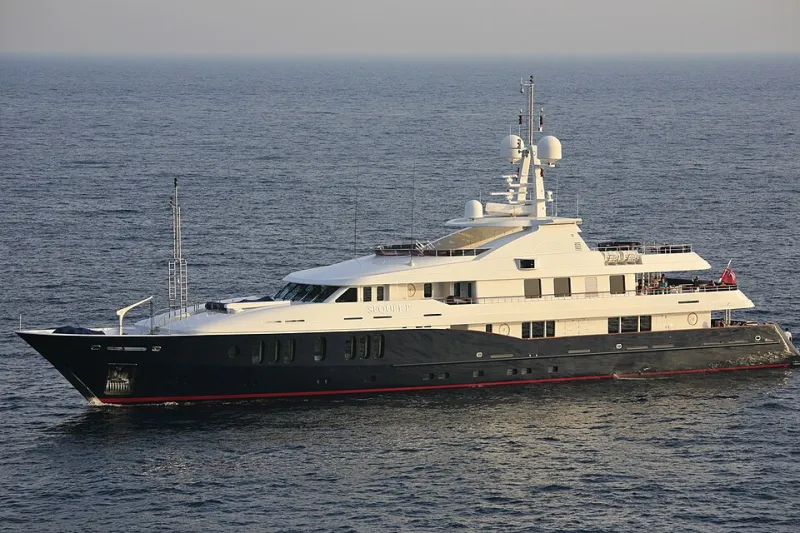
Photo: Diamovitcar, CC BY-SA 4.0, via Wikimedia Commons
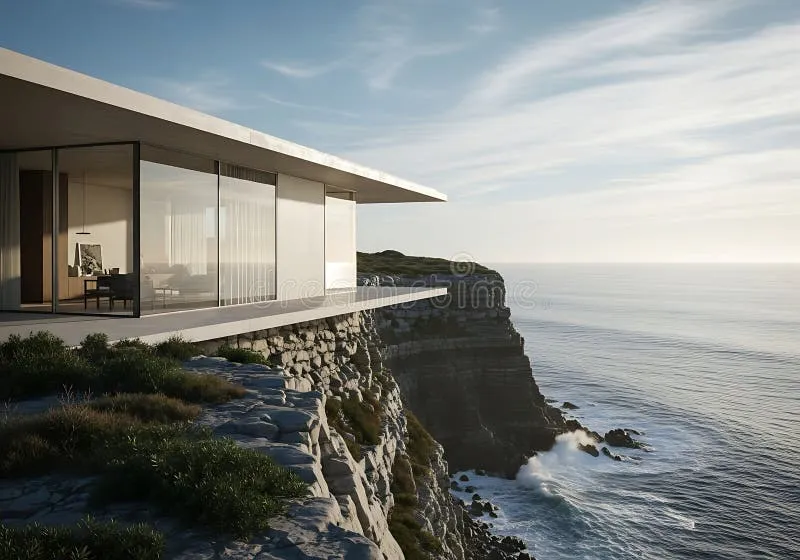
Stand on the foreshore at Noosa, or look across the water from a Sydney Harbour ferry, and the silhouettes of Australia's most celebrated private residences are unmistakable. Cantilevered decks, glass pavilions, and infinity edges announce themselves with a confidence that seems to court attention. Yet the occupants of these homes — many among Australia's most recognisable business figures, entertainers, and global executives — move through their days with a degree of seclusion that would surprise casual observers.
This is not accidental. It is the product of meticulous planning, significant investment, and a discipline that now sits at the intersection of architecture, technology, and law. The question of how to remain unseen while occupying one of the most visible properties on the coastline has become one of the defining design challenges of contemporary luxury real estate.
Designing Invisibility from the Inside Out
The most effective privacy solutions in high-end coastal homes begin not with technology or legal structures, but with the architectural brief itself. Leading designers working at this level are increasingly asked to engineer what might be described as directed exposure: homes that present a considered face to the world while concealing the rhythms of daily life entirely.
This involves a sophisticated manipulation of sightlines. Landscaping is deployed not merely for aesthetic effect but as a strategic screen — mature plantings selected for density and growth rate, positioned to interrupt specific viewing angles from neighbouring properties, public walkways, or the water. On the Mornington Peninsula and along Queensland's Whitsunday coastline, several recently completed estates have incorporated living walls and native canopy plantings that read as natural features while functioning as precisely engineered privacy infrastructure.
Within the structure itself, room placement follows a privacy hierarchy. Primary living areas and master suites are oriented away from public sightlines, with service spaces and secondary bedrooms facing outward. Glass specifications — often involving electrochromic glazing that transitions between transparent and opaque at the touch of a control panel — allow owners to modulate exposure without compromising the connection to the landscape that defines coastal living.
"The brief is never 'build me a bunker,'" notes one architect whose practice operates exclusively within the prestige residential market. "It is always 'give me complete freedom to live naturally, without the sensation of being observed.' Those are very different problems, and the second one is considerably more interesting to solve."
Technology as the Silent Guardian
Beyond architectural strategy, the integration of smart-home technology has transformed what is achievable in residential privacy. Modern luxury properties at the upper end of Australia's market routinely incorporate surveillance and perimeter management systems of a sophistication previously associated with commercial or government installations.
These systems operate largely without visible presence. Cameras embedded within architectural elements, motion detection calibrated to distinguish between wildlife and human intrusion, and automated lighting sequences that suggest occupancy patterns without revealing them — all managed through encrypted platforms accessible only to authorised users. Several estates along the New South Wales Central Coast and Western Australia's Cottesloe foreshore have installed underwater perimeter sensors capable of detecting approach from the water, a consideration that speaks to the particular exposure of coastal properties.
Communication infrastructure receives equal attention. Secure private networks, signal-jamming provisions for sensitive meeting spaces, and protocols governing staff and contractor device use have become standard inclusions in high-specification builds. For owners whose business dealings demand confidentiality, the home must function as a secure environment as well as a private one.
The Legal Architecture of Seclusion
Physical and technological measures address the immediate environment, but Australia's most privacy-conscious buyers also employ legal and structural mechanisms to limit the traceability of ownership itself. Company and trust structures are routinely used to hold high-value properties, reducing the ease with which a title search can connect an address to an individual's name.
This practice, entirely legal and widely used across the prestige market, has become more sophisticated in recent years. Layered corporate structures, sometimes involving entities registered across multiple jurisdictions, can make beneficial ownership opaque to all but the most determined investigator. Conveyancing solicitors and private client advisers working at this level treat ownership structuring as a core component of the acquisition process rather than an afterthought.
Non-disclosure provisions in sales contracts add another layer of protection. Prestige agents are accustomed to managing transactions in which the identities of the parties are withheld from all but the legally required disclosures, and where settlement occurs with a minimum of documentation in the public record.
The Agent's Dilemma
For the agents entrusted with selling these properties, privacy requirements create a distinctive professional challenge. A home that cannot be photographed in full, whose address cannot be published, and whose vendor cannot be named demands a marketing approach built on relationship and discretion rather than broad exposure.
At this level, properties rarely appear on public listing portals. Instead, they circulate through curated networks of qualified buyers — individuals whose financial capacity and discretion have been established in advance. The agent functions less as a marketer and more as a trusted intermediary, matching specific properties to specific buyers through a process that resembles private banking more than conventional real estate.
"The entire transaction can unfold without a single public record being created until settlement," explains one senior agent with extensive experience in off-market prestige transactions. "That is not unusual at this level — it is expected."
Privacy as a Value Proposition
What is perhaps most striking about this evolution is the degree to which privacy itself has become a quantifiable component of a property's value. In a market where the most desirable addresses are also the most scrutinised, the ability to live without observation commands a measurable premium.
Buyers are willing to pay significantly more for a property that has been engineered for seclusion — and they are increasingly willing to invest in retrofitting privacy infrastructure into established homes. The market for specialist consultants who assess and enhance the privacy credentials of prestige properties has grown considerably in recent years, reflecting the seriousness with which this consideration is now taken.
At Prestige Rockcliff, we understand that exceptional properties serve not only as financial assets and aesthetic statements, but as sanctuaries. The capacity to live fully and freely within one's own home — regardless of its prominence — is, for many of our clients, the most valuable feature of all.