Perched Above the Pacific: What Makes Australia's Clifftop Residences Worth Every Dollar
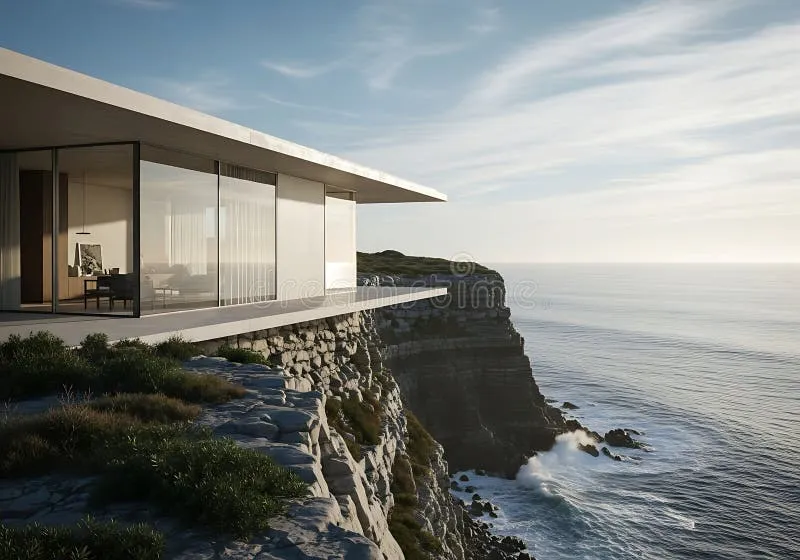
Photo: luxury clifftop house ocean view Australia architectural modern, via thumbs.dreamstime.com
Australia's most coveted clifftop homes occupy a rare intersection of geography, architecture, and desire that places them in a valuation category entirely their own. From the rugged headlands of Sydney's Northern Beaches to the dramatic limestone escarpments of Western Australia's Leeuwin Coast, these properties command prices that frequently astonish even seasoned market observers. Understanding precisely why requires a closer examination of the forces — natural, structural, and psychological — that conspire to make them irreplaceable.
The Geography of Desire
Scarcity, in the luxury property market, is not merely a marketing term. It is the foundational reality upon which exceptional valuations are built. Australia's coastline stretches for nearly 36,000 kilometres, yet the proportion of that expanse offering true clifftop positioning — elevated, stable, ocean-facing land with unobstructed sightlines — is vanishingly small. Coastal councils across New South Wales, Victoria, and Queensland maintain strict development restrictions that further limit what can be built and where, ensuring that existing clifftop residences remain largely irreplaceable assets.
The view from these elevations is not simply pleasant; it is transformative. Buyers consistently report that standing on a clifftop terrace and watching the ocean shift from deep indigo to silver with the turning of the tide produces an emotional response that no inland property — regardless of its appointments — can replicate. Property valuers with decades of experience in prestige coastal markets have long acknowledged that panoramic ocean views can add anywhere from 30 to 80 per cent to a comparable property's baseline value, depending on the quality and permanence of the outlook.
Permanence is the operative word. Unlike a river view that may be compromised by future development, or a city skyline that evolves over time, the Pacific Ocean is not going anywhere. Buyers understand that they are acquiring a view that is, for all practical purposes, protected in perpetuity.
The Engineering of the Extraordinary
Building at the cliff's edge is not for the faint-hearted — nor for the budget-conscious. The engineering challenges inherent in clifftop construction are substantial, and they contribute meaningfully to the final valuation of any completed residence.
Site preparation alone can be extraordinarily complex. Geotechnical assessments must evaluate the stability of the rock face, the depth and composition of the substrate, and the long-term implications of coastal erosion. Piled foundations are frequently required, driven deep into the underlying geology to anchor the structure against wind loads that can, on exposed headlands, exceed anything experienced in metropolitan settings.
The materials specified for clifftop construction must withstand a relentless marine environment. Salt-laden air accelerates corrosion in metals and degrades conventional building materials with remarkable efficiency. Architects working in this specialised field routinely specify marine-grade stainless steel, powder-coated aluminium, naturally durable timbers such as spotted gum and ironbark, and concrete mixes formulated to resist chloride penetration. Every detail, from the glazing specification to the choice of external hardware, is informed by the understanding that the ocean is as beautiful as it is demanding.
These requirements translate directly into construction costs that frequently exceed those of comparable metropolitan projects by a significant margin. A clifftop home that might cost $3,000 per square metre to build in a sheltered suburban location could easily require $5,500 or more per square metre when the full suite of coastal engineering and materials considerations is applied. Far from deterring buyers, these elevated construction costs serve as a form of quality assurance — they are evidence that the residence has been built to endure.
Architecture as Conversation with the Landscape
The finest clifftop homes in Australia are not merely built on the coast — they are in active dialogue with it. The architects who have distinguished themselves in this genre share a common philosophy: that the building's primary obligation is to frame, celebrate, and occasionally surrender to the landscape that surrounds it.
Floor-to-ceiling glazing oriented toward the prevailing ocean view has become a signature of the genre, but the most sophisticated examples go considerably further. Cantilevered terraces extend the living plane beyond the building envelope, dissolving the boundary between interior and exterior. Infinity pools positioned at the cliff's edge create the visual illusion that the water within them flows seamlessly into the ocean beyond. Rooflines are shaped to echo the geological forms of the headland itself, so that the residence appears to have emerged from the rock rather than been imposed upon it.
Interior planning in these homes is equally considered. The orientation of principal rooms, the placement of corridors, and even the positioning of artworks are calibrated to ensure that the ocean view is experienced as a sequence of revelations rather than a single static image. A guest arriving at the front door may glimpse the horizon through a carefully positioned window before the full panorama is revealed upon entering the main living space — a theatrical device that never fails to produce an impression of profound luxury.
Exclusivity as a Value Proposition
Beyond the physical attributes of the site and the structure, clifftop properties carry a social and psychological premium that is difficult to quantify but impossible to ignore. Ownership of a clifftop residence in one of Australia's prestige coastal corridors — the stretch of headlands between Palm Beach and Barrenjoey, the cliffs above Byron Bay's Wategos Beach, or the elevated ridgelines of Portsea on the Mornington Peninsula — confers a form of distinction that is recognised and respected within the circles that matter to high-net-worth buyers.
These are not merely homes. They are statements of achievement, expressions of taste, and — in a market where truly exceptional properties are offered for sale with decreasing frequency — stores of value that have demonstrated remarkable resilience across multiple economic cycles. Luxury property analysts have consistently observed that clifftop and oceanfront prestige properties in Australia's most sought-after coastal markets tend to hold their value more robustly during periods of broader market correction than properties in any other category.
What Buyers Are Actually Paying For
When a buyer commits $20 million, $35 million, or more to a clifftop residence, they are not simply purchasing a home. They are acquiring a confluence of irreplaceable attributes: a site that cannot be replicated, a view that cannot be obstructed, a structure engineered to outlast its era, and an address that communicates unambiguously to the world that they have arrived.
The premium embedded in Australia's finest clifftop properties is not, in the final analysis, a product of market speculation or passing fashion. It is the logical expression of genuine rarity meeting genuine aspiration. In a world of increasing density and diminishing natural frontiers, the clifftop home stands as one of the last truly irreducible luxuries — a place where the continent meets the ocean, and where exceptional buyers choose to make their home.