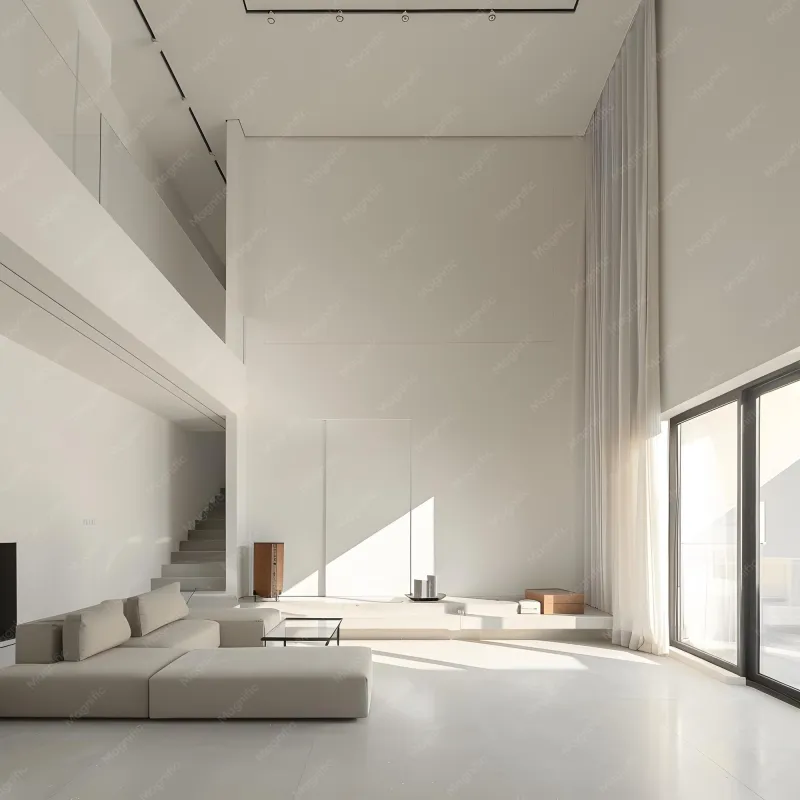
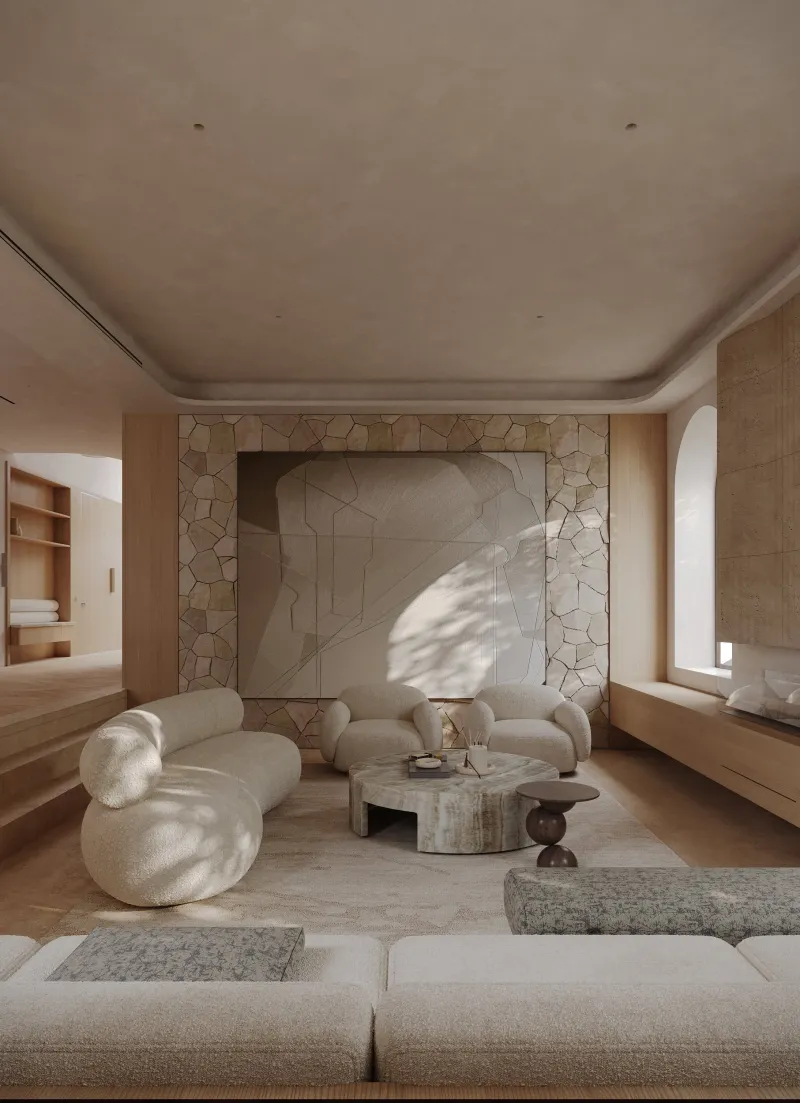
The Property Collector: How Australia's Wealthiest Are Building Real Estate Portfolios With a Curator's Eye
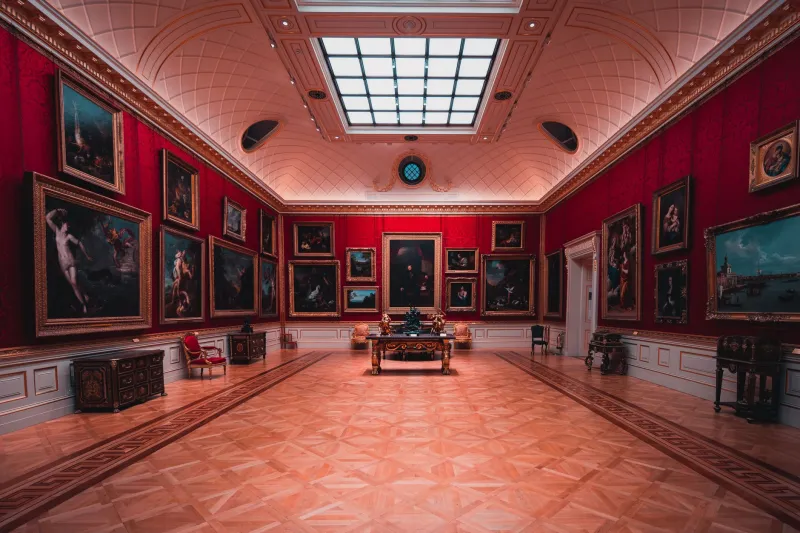
There is a particular kind of buyer who does not speak of returns in the first conversation. They speak instead of proportion, of light, of what a building says about the period that produced it. They are not indifferent to value — far from it — but they understand that the most enduring value is rarely the kind that appears on a quarterly statement. These are Australia's property curators, and their influence on the prestige market is becoming impossible to ignore.
Across Sydney's harbourside enclaves, Melbourne's leafy inner-east, and the sun-bleached clifftops of Queensland's Sunshine Coast hinterland, a cohort of high-net-worth individuals is quietly assembling property portfolios with the same deliberate intelligence that drives the acquisition of significant art, rare furniture, or first-edition manuscripts. The philosophy is not new — collectors have always understood that a great holding is defined as much by what is excluded as by what is included — but its application to real estate at this scale and with this degree of rigour is a distinctly contemporary development.
From Portfolio to Gallery
The language shift is telling. Where a previous generation spoke of property portfolios — a term redolent of spreadsheets and asset allocation — today's most sophisticated buyers are more likely to describe their holdings in terms borrowed from the curatorial world. Coherence, provenance, narrative, and restraint are the operative words. A property is not merely acquired; it is considered in relation to everything else the owner holds, and measured against an internal standard that is as much aesthetic as it is financial.
This shift has practical consequences. Buyers operating with a curatorial mindset will frequently pass on properties that present excellent financial fundamentals if those properties do not align with the broader logic of their collection. Conversely, they may pursue architecturally significant or historically resonant homes that a purely returns-focused buyer would overlook, recognising that rarity and integrity are their own form of long-term capital.
The analogy to art collecting is instructive in another respect: just as a serious collector will divest works that no longer serve the coherence of a collection — even at a moment when the market for those works is strong — property curators are increasingly willing to sell holdings that have drifted out of alignment with their evolving vision. Divestment, in this context, is not a concession but an act of editorial discipline.
The Architect as Collaborator
Perhaps the most distinctive feature of this emerging approach is the degree to which buyers are engaging architects and designers not merely as service providers but as genuine creative collaborators. Rather than commissioning individual projects in isolation, curators are working with trusted practitioners across multiple properties, developing a shared visual and spatial language that ties their holdings together across geography and typology.
This kind of sustained relationship produces something qualitatively different from the standard client-architect engagement. Over time, the architect develops an intimate understanding of the owner's sensibility — their tolerance for material rawness, their relationship to landscape, their preferences around enclosure and openness — and is able to apply that understanding across a range of contexts. The result is a body of work that reads, to the informed eye, as a coherent statement rather than a series of unrelated commissions.
Some of Australia's most respected residential architects have spoken, with appropriate discretion, about the particular satisfaction of these long-form collaborations. The freedom to develop ideas across multiple sites and over extended timeframes allows for a depth of exploration that single-project commissions rarely permit. For the client, the benefit is a collection of properties that feels genuinely authored — possessed of an internal logic that transcends individual sites.
Significance Beyond the Suburb
For the curatorial collector, the question of where a property sits in the broader cultural and architectural landscape matters as much as its postcode. A mid-century home by a significant Australian architect carries a different kind of weight than a recently completed residence of comparable size and finish. A heritage-listed terrace in an established inner-city neighbourhood speaks to a different chapter of the national story than a contemporary clifftop pavilion, however impeccably resolved.
This sensitivity to provenance and cultural significance is not mere connoisseurship for its own sake. It reflects a genuine understanding that the most resilient property values are typically those underwritten by something more durable than market sentiment — by history, by craft, by the kind of architectural ambition that does not date. In this sense, the curatorial approach is not in tension with financial acuity but is, rather, its most sophisticated expression.
It is worth noting that this orientation tends to produce buyers who are unusually well-informed about the properties they pursue. They have often spent years developing relationships with agents, architects, and cultural institutions before a particular acquisition opportunity presents itself. When they move, they move with conviction — and they are rarely surprised by what they find.
The Discipline of Exclusion
If there is a single principle that distinguishes the curatorial collector from other high-end buyers, it is the willingness to say no. The most impressive collections — in art, in property, in any domain — are defined less by the ambition of individual acquisitions than by the rigour with which lesser candidates are declined. This is a discipline that runs counter to certain instincts of the acquisition-minded, and it is one that takes time to develop.
For those who have internalised it, however, the rewards are considerable. A property collection assembled with genuine editorial discipline is not merely an impressive asset base; it is, in the fullest sense, a personal statement — a record of sustained attention and considered judgment that will outlast its creator and, in time, become a form of legacy in its own right.
At Prestige Rockcliff, we work with buyers who understand that the finest properties are not simply found — they are recognised. The curatorial collector has always known this. It is gratifying to see the broader market beginning to catch up.