Designing for the Next Generation: How Australia's Wealthy Families Are Building Estates That Outlast Their Own Tastes
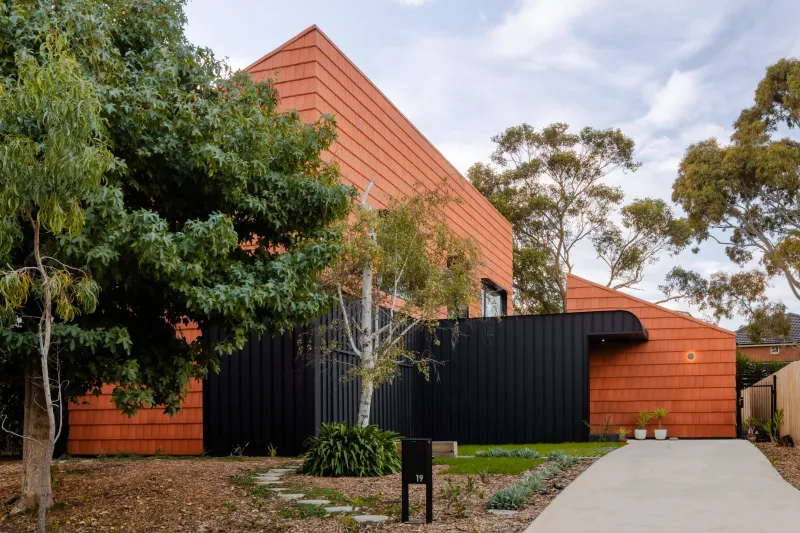
Photo: multigenerational family luxury estate Australian architecture modern heritage, via rarchitecture.com.au
Wealth, in its most durable form, is rarely just a number. It is a collection of decisions — about land, about architecture, about the kind of life a family intends to build across time. In Australia, where significant private wealth has been accumulated across two to three generations in earnest, those decisions are now arriving at a particular inflection point.
The families who built their estates in the 1980s and 1990s did so with a particular vision of luxury: formal entertaining spaces, grand proportions, symbols of arrival. Their children — and in some cases, their grandchildren — hold a fundamentally different set of expectations. And the properties that will successfully bridge that gap are those whose owners have had the foresight to plan for a future they cannot entirely predict.
A Collision of Values
To understand the challenge, it helps to map the distance between the generations now negotiating it. Baby Boomer wealth creators, broadly speaking, came of age in a period when luxury was synonymous with formality. The prestige home was a statement property — architecturally assertive, materially lavish, and designed to impress a particular social world.
Gen X and Millennial inheritors, by contrast, have grown up in a period shaped by very different influences: digital connectivity, environmental awareness, a preference for experience over display, and a deep scepticism of status for its own sake. For this cohort, the ideal property is not the one that announces itself most boldly, but the one that serves life most intelligently.
These are not superficial differences. They represent genuinely distinct philosophies of living — and reconciling them within a single architectural brief is one of the more interesting challenges facing Australian prestige property today.
The Adaptive Estate
The most sophisticated response to this challenge is what might be called the adaptive estate: a property designed not around a fixed vision of how life should be lived, but around the capacity to accommodate multiple and evolving visions.
In practical terms, this manifests in several ways. Structural flexibility is perhaps the most foundational. Properties being built or significantly renovated with multigenerational succession in mind are increasingly incorporating spatial configurations that can be reconfigured without structural intervention. Formal dining rooms designed to convert to collaborative workspaces. Guest wings with independent access and self-contained amenities. Garages sized not merely for the current collection, but for whatever the next generation might require — be that electric vehicles, workshop space, or something not yet imagined.
This kind of built-in flexibility does not compromise the integrity of a property. Executed well, it is invisible — a structural intelligence that reveals itself only when it is needed.
Technology as Infrastructure, Not Feature
One of the clearest fault lines between generational expectations runs through technology. For wealth creators who commissioned their principal residences twenty or thirty years ago, technology was largely additive — a home automation system here, a dedicated media room there. It sat on top of the architecture rather than being woven into it.
For the generation now inheriting and acquiring, technology is infrastructure. It is expected to be as invisible and reliable as plumbing, and as comprehensive as the internet connectivity that underpins every aspect of contemporary professional and personal life.
The estates being designed with succession in mind are reflecting this shift. Robust, future-proofed data infrastructure — conduit systems that can accommodate whatever connectivity standards emerge over the next two decades — is now a baseline consideration rather than an optional extra. Building management systems that can be operated remotely and updated without physical intervention are becoming standard in properties at this level. Energy management systems that integrate solar generation, battery storage, and grid interaction are not merely environmental gestures; they are the kind of operational intelligence that the next generation actively values.
Importantly, all of this is being designed to disappear. The most successful technology integrations in prestige properties are those you never notice — until the moment you need them.
Amenity Recalibration
The amenity arms race that characterised the peak of the maximalist era produced some extraordinary domestic infrastructure: climate-controlled wine rooms for collections in the thousands, home cinemas with commercial-grade projection, indoor pools maintained at resort standards. These remain impressive. But they are not necessarily what the next generation is reaching for.
Increasingly, inheritors are expressing preference for amenities that support health, connection, and purpose over those that signal consumption. Wellness spaces — designed with the same architectural rigour as any other part of the home — are replacing or supplementing traditional entertainment facilities. Dedicated spaces for creative practice, whether that is music, visual art, or physical discipline, are being incorporated into briefs that would previously have prioritised a games room or bar.
Outdoor spaces are being reconsidered with similar intentionality. Rather than the manicured formality of an earlier era, the preference is shifting toward landscapes that are productive, ecologically thoughtful, and genuinely liveable — kitchen gardens, native plantings, spaces designed for informal gathering rather than ceremonial presentation.
The Structural Conversation
Beyond architecture and amenity, the most consequential planning happening in Australian family estates at present is structural in a different sense: the legal and financial architecture that determines how a property passes between generations, and on what terms.
This is, admittedly, territory that extends beyond bricks and mortar. But it is inseparable from the physical decisions being made about how these properties are built and maintained. Families who have engaged seriously with succession — who have had the sometimes uncomfortable conversations about values, expectations, and intentions — are those whose estates tend to hold together across generations. Those who have not are those whose properties too often become the subject of dispute, dilution, or distressed sale.
The most forward-thinking families are approaching this as a unified brief: architectural, financial, and relational. The estate they are building is not just a physical asset. It is a vehicle for continuity — one that needs to be designed with the same care and intelligence as any other aspect of their legacy.
At Prestige Rockcliff, we work with families at precisely this junction — where the decisions made today will determine what is possible tomorrow. The properties that navigate this transition most successfully are those whose owners understood, early enough, that building for the future is not the same as building for yourself.