Surrounded Yet Alone: The Architecture of Urban Seclusion in Australia's Most Coveted Neighbourhoods
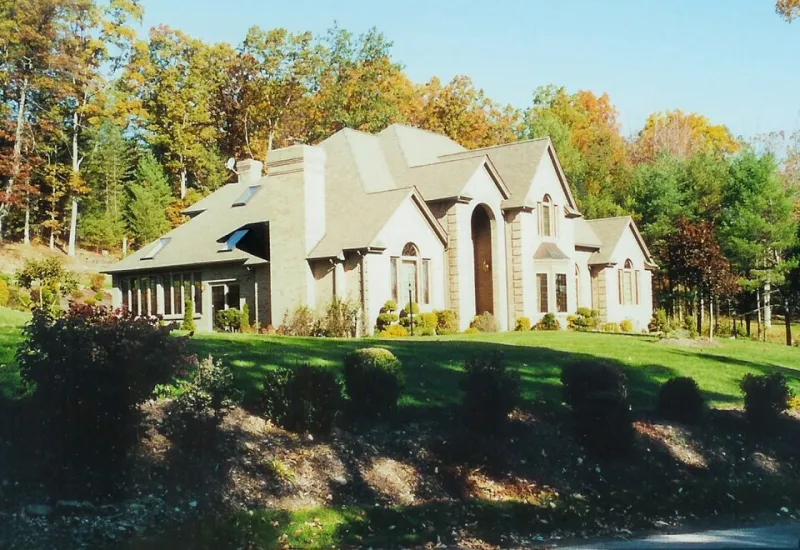
Photo: No machine-readable author provided. Stilfehler assumed (based on copyright claims)., Public domain, via Wikimedia Commons
There is a particular paradox at the heart of Australia's most prestigious inner-city real estate: the properties commanding the highest prices are frequently those situated mere metres from their neighbours, yet feel as remote as a clifftop retreat. In suburbs like Toorak, Vaucluse, and South Yarra, where land is measured in the hundreds of thousands per square metre, the true luxury on offer is not space itself — it is the carefully constructed impression of it.
This is the art of the invisible neighbour, and Australia's ultra-wealthy are investing extraordinary sums to master it.
The Psychology of Urban Privacy
For high-net-worth buyers navigating the inner-city market, the desire for seclusion is rarely about misanthropy. It is, rather, about control — the ability to dictate the terms of one's sensory environment in a landscape that is inherently shared. Noise, sightlines, the ambient awareness of other lives being lived nearby: these are the subtle intrusions that premium buyers are increasingly unwilling to accept.
Property advisors working with Melbourne and Sydney's top-tier clientele report that privacy infrastructure — a term that barely existed in luxury real estate parlance a decade ago — has become a primary purchase driver. Buyers who once prioritised water views or heritage façades are now asking pointed questions about acoustic engineering and visual buffer zones before they will consider attending an inspection.
The premium attached to properties that have solved this equation is substantial. Comparable homes on the same street can differ by 15 to 25 per cent in value based solely on the sophistication of their privacy solutions.
Architectural Innovation at the Boundary Line
The most elegant responses to urban proximity begin at the design stage, long before a single stone is laid. A cohort of Australian architects — many trained in European ateliers where dense urban living has been refined over centuries — are approaching boundary conditions as a primary creative challenge rather than an afterthought.
In practice, this manifests in several distinctive strategies. Double-skin façades, originally developed for thermal performance, are being deployed along street and side boundaries to create layered visual barriers that shift character with the light. Internal courtyard configurations draw living spaces away from perimeter walls, creating homes that turn inward toward private gardens and sky rather than outward toward neighbouring structures.
One notable Toorak residence completed in recent years exemplifies this approach. The home's primary living pavilions are oriented around a central water garden, with the building's mass acting as a deliberate acoustic shield against the surrounding streetscape. Visitors describe the experience of moving through the entry sequence as a transition — a shedding of the city's ambient noise and visual complexity — that feels almost ceremonial.
Landscape as Architecture
Beyond the built form, landscape design has emerged as one of the most powerful tools in the urban privacy arsenal. The discipline has evolved considerably from its ornamental origins; in the hands of the country's leading landscape architects, planting schemes function as living walls, sound-dampening masses, and carefully choreographed visual sequences that guide the eye away from boundary lines entirely.
Mature specimen trees — particularly those with dense canopies that perform year-round — have become prized acquisitions in their own right. In Sydney's Eastern Suburbs, the presence of established fig trees or mature Lilly Pillies on a property can add meaningfully to its asking price, recognised by sophisticated buyers as infrastructure rather than decoration.
Grade changes are exploited with similar intention. Sunken garden rooms, raised terraces, and sculpted landforms create topographical separation between a property and its surrounds, establishing a sense of elevation and remove that is psychological as much as physical.
Smart Technology and the Sensory Envelope
Where architecture and landscape leave gaps, technology is increasingly called upon to close them. The integration of smart home systems into privacy design has moved well beyond automated blinds and security cameras, entering territory that would have seemed extravagant even five years ago.
Directional acoustic systems — originally developed for commercial and hospitality environments — are being specified in residential projects to create zones of managed sound within a property. These systems can mask the intrusion of neighbour noise with carefully calibrated ambient soundscapes, from gentle water features to barely perceptible low-frequency tones that the brain interprets as silence.
Electrochromic glazing, which transitions from transparent to opaque at the touch of a screen, allows homeowners to modulate their visual connection to the outside world without sacrificing natural light. In properties where proximity to neighbouring windows is unavoidable, this technology offers a level of discretion that no fixed architectural element can match.
The Market Premium for Mastery
For buyers and their advisors, the financial logic of investing in urban privacy infrastructure is increasingly well understood. Properties that have been comprehensively designed with seclusion in mind demonstrate stronger price resilience across market cycles, attracting a narrower but more committed pool of buyers for whom the solution is genuinely irreplaceable.
This is particularly evident in the off-market segment, where some of Australia's most discreet transactions involve properties whose primary selling proposition is not size, view, or heritage significance — but the remarkable completeness of their private world.
At Prestige Rockcliff, we have observed this trend deepen consistently over the past several years. The buyers commissioning and acquiring these properties are not simply purchasing real estate. They are investing in a specific quality of daily life — one in which the city exists as a convenience rather than an intrusion, and home remains, always, a sanctuary.