Tear Down to Build Up: Why Australia's Wealthiest Are Choosing the Blank Canvas Over the Trophy Home
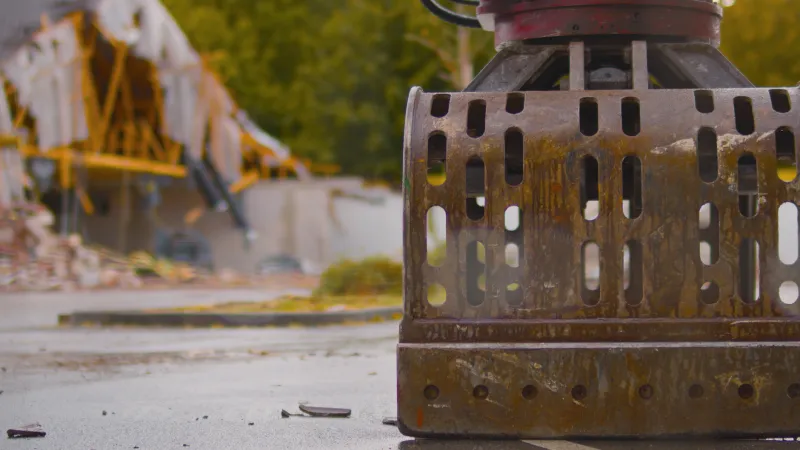
There is a particular kind of audacity required to purchase a $30 million residence and promptly schedule it for demolition. Yet across Sydney's Point Piper, Melbourne's Toorak, and Queensland's Sunshine Beach, this is precisely what Australia's most affluent buyers are doing with increasing frequency. The trophy home — once the pinnacle of prestige real estate — is giving way to something altogether more personal: the bespoke commission.
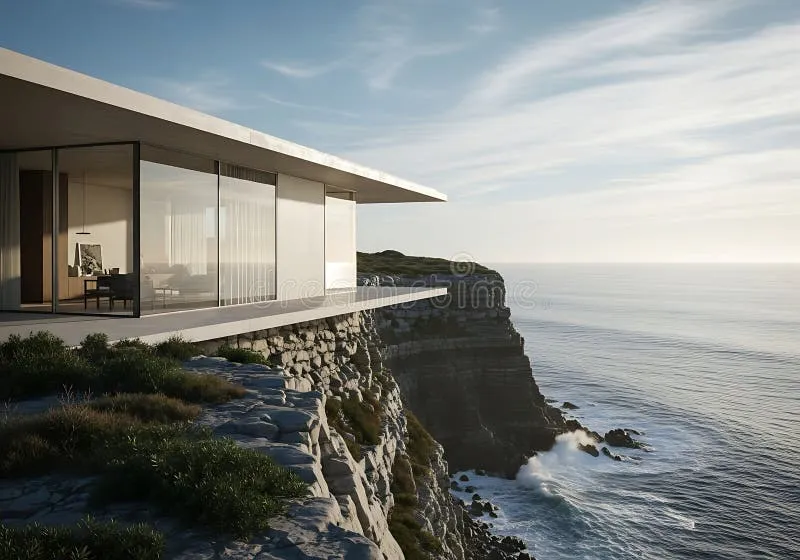
For a growing cohort of ultra-high-net-worth individuals, the act of acquisition is merely the beginning. What follows is an often years-long process of deconstruction and reinvention, guided by world-class architects and an unwavering commitment to originality. In this emerging paradigm, the most coveted address is not one with an illustrious history — it is one that bears the unmistakable imprint of its current owner.
The Limitations of Legacy
The appeal of an established prestige property has always rested on its provenance. Architectural pedigree, historical significance, and the cachet of a previous owner's name have long commanded premiums in Australia's luxury market. However, for buyers operating at the very apex of the wealth spectrum, these same qualities have begun to feel like constraints rather than assets.
"There is a ceiling to what you can achieve through renovation," explains one Sydney-based luxury architect who has overseen several high-profile demolition-and-rebuild projects across the Eastern Suburbs. "When a client has a specific vision — a particular relationship between interior and exterior, a precise orientation toward the harbour, a structural philosophy that simply cannot be grafted onto an existing frame — the only honest answer is to start from nothing."
This sentiment is echoed throughout the industry. Established homes, regardless of their original quality, carry embedded compromises: ceiling heights determined by a previous era's standards, floorplates that predate open-plan living, and infrastructure that struggles to accommodate the sophisticated smart-home systems today's buyers expect as a baseline.
Location as the True Asset
What drives buyers to pay tens of millions for a property they intend to demolish is not the structure itself — it is the land beneath it. In Australia's most tightly held precincts, titled land rarely becomes available. When it does, it commands extraordinary premiums, and buyers understand that the opportunity to secure a particular block may not present itself again within their lifetime.
In suburbs such as Vaucluse, Bellevue Hill, and Brighton, landholdings of sufficient scale to accommodate a contemporary mega-mansion are essentially non-existent unless one is willing to acquire and remove what already stands. The calculation, for buyers of sufficient means, is straightforward: pay for the location, absorb the cost of demolition, and invest in a structure built entirely to specification.
Construction budgets for these projects frequently exceed the purchase price of the original property. A $25 million acquisition might be followed by a $20 million build — yet the resulting asset, once complete, can command valuations that dwarf both figures combined. The logic is financial as much as it is aesthetic.
Architecture as Identity
Beyond the practical considerations, there is a deeply personal dimension to this trend that speaks to shifting attitudes among Australia's wealthiest individuals. In an era when luxury goods are more accessible than ever — when a premium vehicle or bespoke wardrobe no longer signals true exclusivity — the private residence has assumed an outsized role as a statement of identity.
"The home has become the ultimate canvas," observes a Melbourne-based developer who specialises in ultra-premium residential projects. "For clients who have essentially everything, the question is no longer what they can acquire. It is what they can create. A home that has been imagined from the ground up, that reflects their specific sensibility in every material choice and spatial decision — that is something that cannot be replicated or purchased off the shelf."
This impulse toward singularity extends to the architects these clients engage. International firms with global reputations — studios whose waiting lists span years — are increasingly sought for Australian commissions. Local talent of equivalent calibre is similarly in demand, with several boutique practices now working exclusively within the prestige demolish-and-rebuild space.
The Regulatory Landscape
Not every council jurisdiction in Australia accommodates demolition with equal ease. Heritage overlays, neighbourhood character provisions, and environmental considerations can complicate or preclude the removal of existing structures in certain precincts. Savvy buyers conduct thorough due diligence before proceeding, engaging planning consultants alongside their architectural teams from the earliest stages.
In some cases, partial demolition — retaining a heritage facade while gutting and reconstructing the interior — represents a workable compromise. This approach, sometimes called a "facadectomy" within the industry, allows buyers to satisfy planning requirements while still achieving the spatial and technical outcomes their vision demands.
A New Benchmark for Prestige
The implications for Australia's luxury property market are significant. As bespoke construction becomes increasingly associated with the highest tier of wealth, the definition of prestige itself is evolving. A home's value is no longer determined solely by its address and heritage; it is shaped by the specificity of its design, the quality of its materials, and the clarity of its architectural intent.
For agents working at this level, the shift demands a different kind of expertise. Understanding a property's development potential — its setbacks, its orientation, its capacity to accommodate a particular building envelope — has become as important as understanding its existing attributes.
At Prestige Rockcliff, we observe this transformation with genuine fascination. The buyers reshaping Australia's most prestigious streetscapes are not simply purchasing homes. They are commissioning legacies — structures that will define their postcodes for generations to come. In doing so, they are raising the standard against which all prestige property will ultimately be measured.