Built to Last: The Engineering Principles Behind Australia's Most Enduring Clifftop Residences
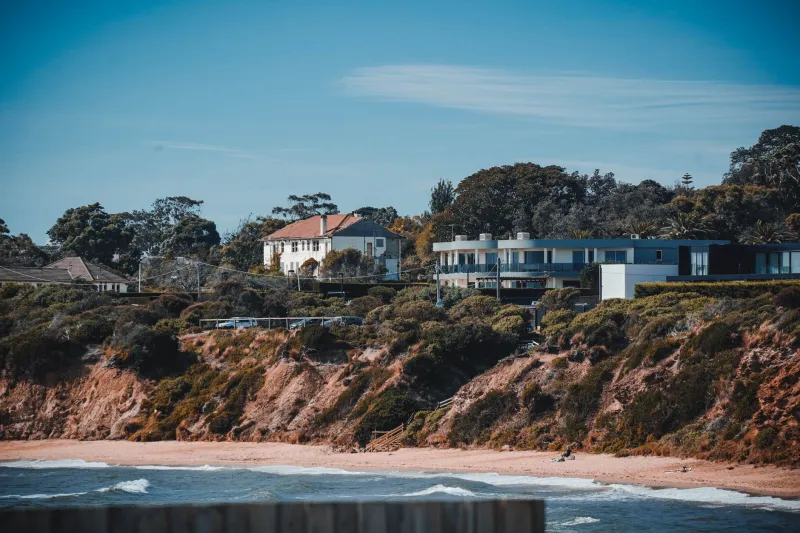
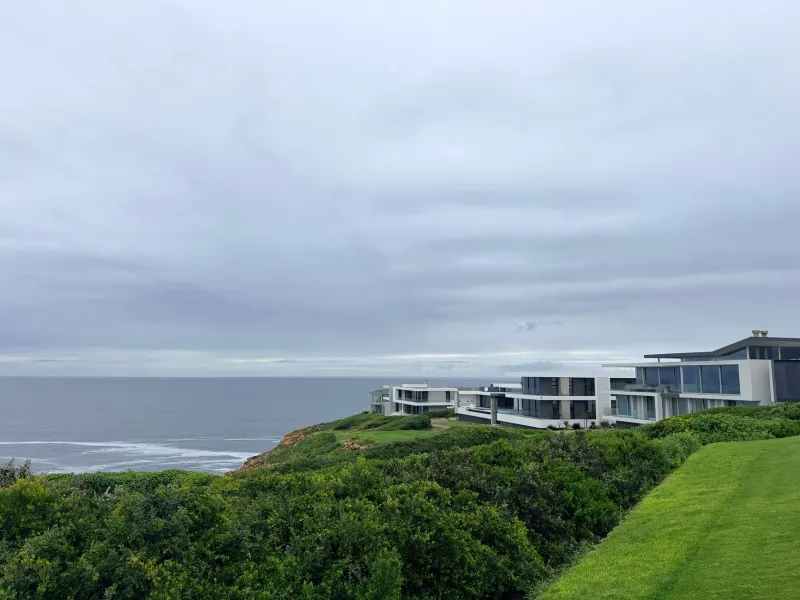
The view from a clifftop residence on Australia's coastline is among the most compelling arguments any property can make for itself. The Pacific stretching to the horizon from a headland north of Sydney. The Southern Ocean visible across Mornington's western reaches at dusk. The Coral Sea catching morning light from a private ridge above the Whitsundays. These are not simply pleasant aspects — they are experiences of genuine rarity, and the properties that command them carry a premium that reflects exactly that.
But the same geography that produces these views imposes conditions that test every material and engineering decision made during construction. Salt-laden air, sustained wind loading, coastal erosion, and the compounding effects of climate variability do not distinguish between an ordinary dwelling and a prestige estate. They simply act upon whatever is placed in their path. The difference between a clifftop property that endures with dignity across generations and one that begins to show compromise within a decade lies entirely in the rigour with which these forces were anticipated and addressed before a single foundation was poured.
The Ground Before the Structure
Every serious discussion of clifftop property engineering begins not with the building but with what lies beneath it. The geological character of elevated coastal land in Australia varies considerably — from the ancient sandstone formations that underpin Sydney's northern headlands to the basalt platforms of Victoria's surf coast and the more variable sedimentary profiles found along Queensland's elevated coastal ridges. Each presents a distinct engineering context, and each demands a site-specific response.
Geotechnical investigation at the prestige level extends well beyond the standard soil test. It encompasses detailed assessment of fracture patterns in underlying rock, mapping of groundwater movement, analysis of historical erosion rates, and — increasingly — modelling of projected coastal change over 50- and 100-year timeframes. This last element has moved from advisory best practice to practical necessity as insurance and lending markets respond to the growing body of climate science bearing on coastal property risk.
The findings of this investigation inform foundation design in ways that are not always visible in the finished structure but are entirely determinative of its long-term integrity. Piers driven to bedrock rather than resting on near-surface material. Drainage systems designed to manage the groundwater behaviour documented in the geotechnical report. Retaining structures engineered not merely for present conditions but for the projected conditions of future decades. These decisions are made once, at the outset, and their quality cannot be corrected economically after the fact.
Materials Selected for the Long Term
The material palette of Australia's most enduring clifftop residences reflects a consistent set of priorities: resistance to salt corrosion, structural performance under sustained wind loading, thermal stability across the temperature range experienced in coastal environments, and — not incidentally — an aesthetic character that improves with the passage of time rather than deteriorating.
Marine-grade stainless steel and hot-dip galvanised structural elements have become standard specification at the prestige tier, addressing the accelerated corrosion rates that affect conventional steel in high-salinity environments. Glazing systems engineered to cyclonic standards — relevant not merely in Queensland but increasingly considered in southern states where storm intensity is projected to increase — combine structural performance with the acoustic and thermal qualities that prestige occupants expect.
External cladding choices in the finest clifftop residences tend toward materials with demonstrated longevity in coastal conditions: natural stone with appropriate sealant treatment, fibre cement systems engineered for marine exposure, and hardwood timbers selected from species with documented resistance to moisture and UV degradation. The distinction between these materials and their more economical equivalents is not merely aesthetic. It is the difference between a façade that requires intervention within fifteen years and one that remains structurally and visually sound for considerably longer.
Engineering Resilience Against Climate Variability
The design of prestige clifftop properties in Australia increasingly incorporates explicit provision for the climatic conditions projected over the property's expected lifespan. This is not alarmism — it is the same long-horizon thinking that characterises sophisticated asset management in any domain.
Flood modelling and storm surge analysis inform finished floor levels and the positioning of critical building services. Roof structures are engineered to wind uplift loads that exceed the minimum requirements of the Building Code of Australia, recognising that the minimum standard reflects average conditions rather than the extremes that a well-positioned coastal property will periodically experience. Drainage systems are designed to manage rainfall intensities above historical averages, anticipating the pattern of more concentrated precipitation events that climate modelling consistently projects for Australia's coastal regions.
Passive thermal design — the orientation, shading, and ventilation strategies that reduce reliance on mechanical climate control — serves both the occupant's comfort and the building's long-term durability. Structures that maintain stable internal temperatures with minimal mechanical intervention experience lower rates of material fatigue and condensation-related degradation than those that cycle through significant thermal variation. The prestige residence that performs well passively is, in a very practical sense, a more durable structure.
Aesthetic Integrity Across Generations
Engineering resilience and aesthetic endurance are, in the finest examples of Australian clifftop architecture, not competing considerations but complementary ones. The design decisions that produce a structure capable of weathering decades of coastal exposure tend also to produce buildings of genuine visual authority — forms that respond honestly to their site conditions rather than imposing a stylistic language that the environment will gradually unmask as unsuited to it.
This integrity of response is visible in the work of Australia's most accomplished coastal architects: the way a roofline is pitched to shed wind rather than resist it, the manner in which a terrace is positioned to capture the view while providing shelter from the prevailing south-westerly, the choice of a material palette that acknowledges rather than ignores the tonal character of the coastal landscape. These are not merely aesthetic preferences. They are the outward expression of engineering intelligence.
For buyers evaluating clifftop properties in Australia's prestige market, the capacity to distinguish between these qualities — between a property that has been engineered with rigour and one that has merely been finished with expense — is among the most valuable forms of due diligence available. The clifftop residence that will reward its custodians across generations is identifiable, with appropriate expert guidance, before the contract is signed. The work of finding it is entirely worthwhile.